President Donald Trump on Tuesday said he ordered the military to continue its blockade of the Strait of Hormuz and hold off on a broader attack on Iran until the country’s “fractured” government can offer up a peace plan proposal.
In a Truth Social post, the president said:
Based on the fact that the Government of Iran is seriously fractured, not unexpectedly so and, upon the request of Field Marshal Asim Munir, and Prime Minister Shehbaz Sharif, of Pakistan, we have been asked to hold our Attack on the Country of Iran until such time as their leaders and representatives can come up with a unified proposal. I have therefore directed our Military to continue the Blockade and, in all other respects, remain ready and able, and will therefore extend the Ceasefire until such time as their proposal is submitted, and discussions are concluded, one way or the other. President DONALD J. TRUMP
The U.S. military has the capability to reopen the Strait of Hormuz and keep it open, but doing so would likely require sustained pressure on Iran and close coordination with allies, according to a new account from retired Adm. Dennis Blair, a board member of the centrist group No Labels.
In a write-up circulated by No Labels, Blair, a former U.S. Pacific Command chief and director of national intelligence, said the United States is already tightening the screws by enforcing what he described as a blockade on shipping to and from Iranian ports. He said U.S. Navy ships are intercepting vessels transiting from Iranian ports and ordering them to turn back, a tactic intended to choke off commerce and further degrade Iran’s economic and military capacity.
Blair said most ships comply, but he described a recent escalation in which the Navy disabled an Iranian-flagged cargo ship by firing into its engine room, followed by a boarding operation by Marines who took control of the vessel, its crew and cargo. He said the U.S. could maintain that level of enforcement for an extended period.
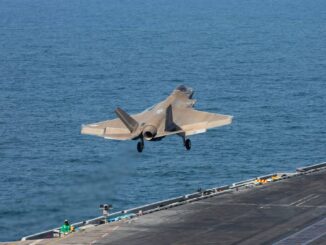
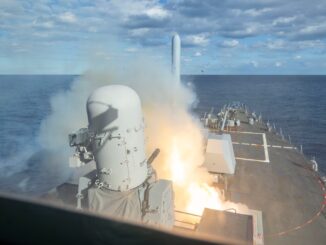
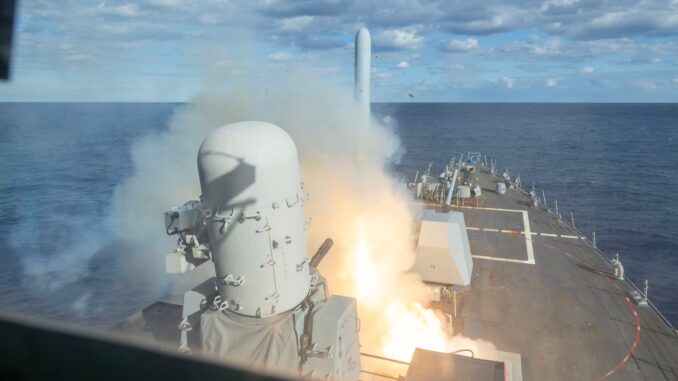
At the same time, Blair said, Iran’s Islamic Revolutionary Guard Corps has been harassing shipping in the strait, and he outlined how the U.S. could “forcibly reopen” the chokepoint if diplomacy fails. His scenario described escorting convoys of oil tankers with multiple destroyers, placing Navy personnel aboard commercial ships for defense and damage control, clearing mines with specialized vessels and underwater drones, and maintaining a heavy air umbrella with fighters and gunships while positioning forces in Oman to respond to attacks.
Blair predicted Iran could still land some hits because of the geography and the volume of threats, but he argued that warships and large tankers are difficult to sink quickly and that repair and recovery hubs outside the strait could keep traffic moving. He said successive convoys could be adjusted based on conditions and could attract additional allied participation, citing recent multinational maritime operations elsewhere as precedent.
If convoys restored traffic, Blair said, energy shipments could resume within weeks, and prices could begin to ease, eroding Iran’s leverage. He cautioned, however, that converting battlefield success into durable stability would require persistence and international cooperation to sustain pressure and enforce any agreements, given what he described as Iran’s long record of treating deals as temporary expedients.