AKRON, Ohio — Too often, when deciding where to visit, Ohio is overlooked. It’s a mistake.
When the Buckeye State is included as a travel option, cities like Cleveland, Columbus, and Cincinnati usually headline the list. These popular spots are worth visiting, making Akron easy to miss entirely. Don’t fall for the trap.
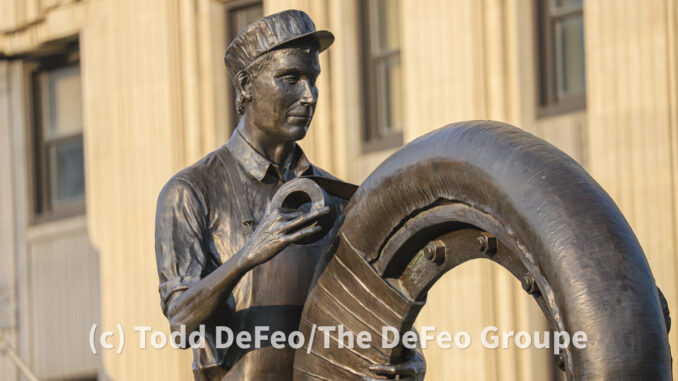
The city, perhaps best known as the “Rubber Capital of the World,” has reinvented itself in recent years, embracing its industrial past. Anyone wanting to pay homage to its role in rubber manufacturing should start their journey at the 12-foot-tall Rubber Worker statue that stands in a roundabout at the intersection of Main and Mill streets.
But Akron’s story runs deeper than rubber, and its early history is closely tied to the Ohio & Erie Canal. Built during the 1820s and 1830s to connect Lake Erie and the Ohio River, the canal was instrumental for the city’s early development.
While the canal, which was abandoned after the 1913 Great Flood, was neglected for years, it has a new life today as a tourist attraction. The Ohio and Erie Canal Towpath Trail and several parks, including locks two, three, and four in the city’s downtown, provide an ideal vantage from which to enjoy the city and its skyline.
The best place for an overview of the city’s history is the new Akron History Center. Opened in April 2025 and operated by the Akron-Summit County Public Library in partnership with the Summit County Historical Society and the non-profit Akron History Center, the museum features 60 exhibits, historical artifacts, and videos that help interpret Akron’s history.
To continue the look at Akron’s history, visit Perkins Stone Mansion, a Greek Revival mansion that Col. Simon Perkins, the son of Akron’s co-founder, General Simon Perkins, built between 1835 and 1837. In 1945, the Summit County Historical Society purchased the mansion, built by Isaac Ladd of Warren, which now serves as a local museum interpreting the Perkins family and Akron’s history.
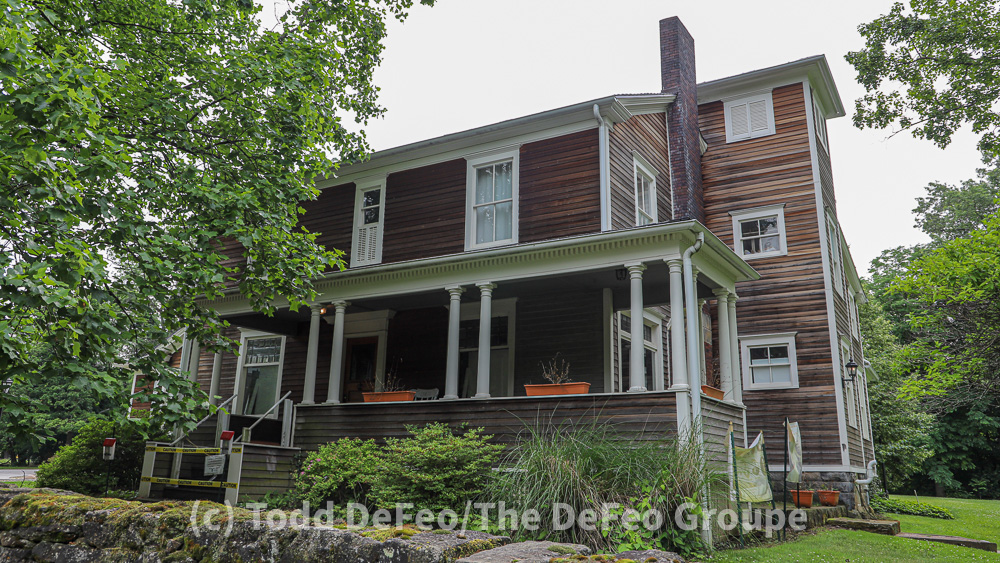
For a different view of the city’s history, check out the John Brown House, an unassuming structure, also called the Stone House, at the intersection of Copley and Diagonal roads.
Brown, one of the most important antebellum figures, lived in Akron from 1844 to 1854. He rented a small house from Perkins, managed sheep and worked in the wool business with him.
While in Akron, historians say Brown’s antislavery efforts strengthened, especially after the passage of the 1850 Fugitive Slave Act. After leaving Ohio, he assured his place in history following the raid on Harpers Ferry.
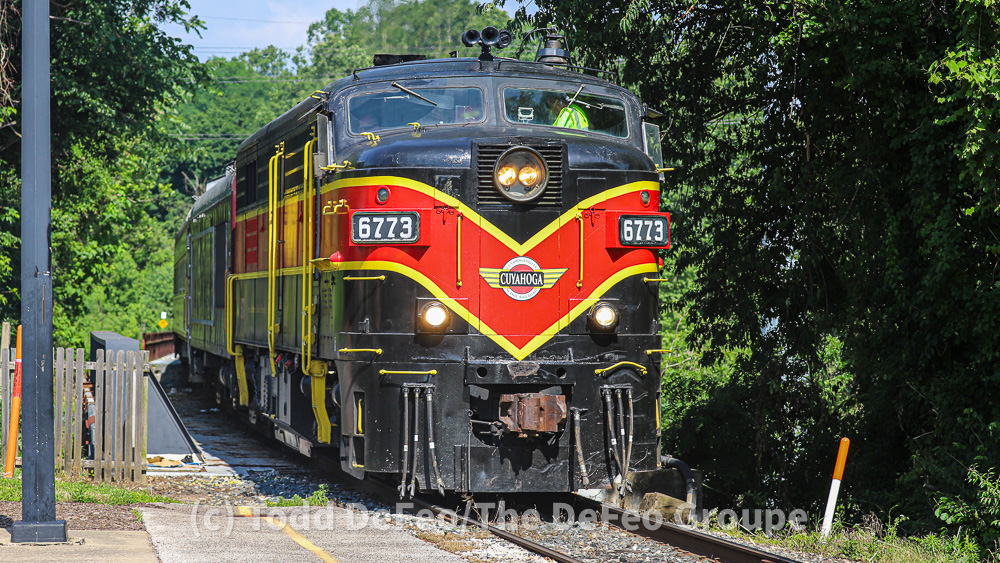
No visit to Akron would be complete without a ride on the Cuyahoga Valley Scenic Railroad. The scenic railroad offers round-trip journeys through the Cuyahoga Valley National Park from Akron Northside, a small station near Akron’s downtown.
The heritage line is a rolling museum, using vintage locomotives and rail cars for its trips. For an even better view, consider a seat in the top level of one of the railroad’s dome cars.
Eat Here, Drink Here
When it comes to libations and dining, Akron offers a surprisingly robust scene.
To start the day off right, consider Muggswigz Coffee and Teas, a coffee roaster and tea merchant that began in 2003 in nearby Canton.
For dinner, check out Crave, located in the former Akron Savings and Loan Company building in the city’s Bowery District downtown. Owned by Akron natives, the restaurant touts its menu as “Eclectic New American,” offering “comfort food with a fine dining twist.”
Don’t miss Lock 15 Brewing, which offers “elevated American comfort food” in addition to an impressive offering of craft brews. The brewery is located in the Cascade Lofts Apartment Building, the renovated 1904 Swinehart Tire & Rubber Co. factory, allowing visitors to enjoy a brew while enjoying the city’s history.