

Guidebooks are annoying. Just because some editor who doesn’t know me tells me which restaurant is the best or what attraction is a must-see doesn’t make it a must-see attraction. Sightseers’ Delight is dedicated to the weird, the quirky and the fun. After all, traveling is fun.
If it’s not, you’re doing it wrong.
All of the places highlighted in this ever-growing database are great. Sightseers’ Delight has visited them all. We think you should make a point to see every one of them. But, this is not a guidebook. Just a webpage to help you plan your next adventure.
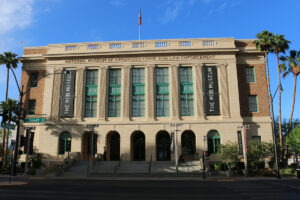
The National Museum of Organized Crime and Law Enforcement, better known as The Mob Museum, is located in Downtown Las Vegas in the historic U.S. Post Office and federal courthouse. The building, on the National Register of Historic Places, on Nov. 15, 1950, hosted one of the Kefauver Committee Hearings, which investigated organized crime. The museum opened on Feb. 14, 2012, the 79th anniversary of the St. Valentine’s Day Massacre. The museum displays artifacts belonging to legendary mobsters, including Al Capone, Bugsy Siegel and John Gotti. It also has St. Valentine’s Day Wall, from the building where members from the South Side Italian gang led by Al Capone in Chicago murdered seven men affiliated with the Moran gang on Feb. 14, 1929.
89101
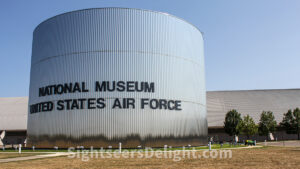
The National Museum of the United States Air Force at Wright-Patterson Air Force Base near Dayton, Ohio, is the Air Force’s official museum and the world’s largest and oldest military aviation museum. Its galleries hold more than 350 aerospace vehicles and missiles displayed across more than 19 acres of indoor exhibit space, along with thousands of artifacts, photographs and documents that trace the history of military flight from the earliest days of aviation to the modern era.
The collection includes many of the museum’s best-known aircraft, among them the B-17 Memphis Belle, the B-29 Bockscar, the only remaining XB-70 Valkyrie, and the world’s only permanent public display of a B-2 stealth bomber. Other galleries focus on World War I, World War II, Korea, Southeast Asia, the Cold War, presidential aircraft, research and development, global airlift and space.
The museum traces its origins to 1923 at McCook Field near Dayton and moved to Wright Field in 1927. Its present-day complex grew over decades, with major additions opening in 1971, 1976, 1988, 2003, 2004 and 2016. Today, it remains one of Ohio’s best-known museums and one of the country’s most significant aviation history sites.
45433
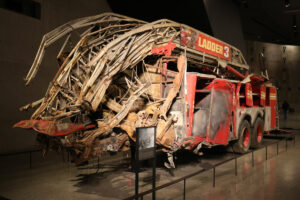
Sept. 11, 2001, was one of the darkest days in the city’s history. The city persevered and rebuilt. The National September 11 Memorial & Museum commemorates that fateful day. The 9/11 Memorial & Museum, located in the basement and footprint of the former Twin Towers, is a poignant reminder of the day, with exhibits bringing to life the heartbreaking, heartwarming and heroic stories that emerged from the devastation and destruction.
10007
New Hope Cemetery in the Atlanta suburb of Dunwoody dates to 1859, though the first known burial dates to May 1887. Many no doubt overlook the cemetery as it is overshadowed by modern developments and urban sprawl. The cemetery is the final resting place for more than 350 people. It was once part of New Hope Presbyterian Church. The last burial in the cemetery was 2014.
30338
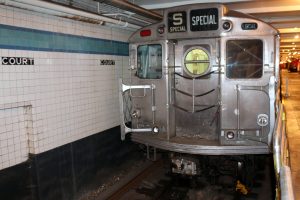
Housed in the former Court Street station, the New York Transit Museum in Brooklyn features exhibits that tell the story of the subway, from its earliest construction to the modern cars that transport tourists and commuters alike every day. The museum opened in 1976. In many ways, the centerpiece of the museum is the station itself. Court Street opened as the terminus for trains on the IND Fulton Street Line. However, it closed in 1946 due to low ridership numbers and sat largely vacant for three decades. It was used at times as a filming location for movies set in New York City. On July 4, 1976, the temporary New York City Transit Exhibit opened in the Court Street, coinciding with the United States Bicentennial celebration. The exhibit proved to be so popular the exhibit was made permanent.
11201
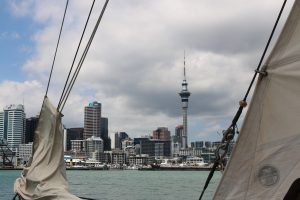
The National Maritime Museum celebrates New Zealand’s seafaring history from the voyaging traditions of the Pacific peoples to early European arrivals and modern ocean racing. In Māori, the museum name is Te Huiteananui-a-Tangaroa, the legendary house belonging to Tangaroa, Māori god of the sea. Galleries tell the story of peoples whose lives were forever linked to the sea. Along the way, try your hand at yacht design, relax in a Kiwi style bach, hear the cannon fire and test your sea legs in the rocking cabin. Don’t miss the opportunity to get out on the water aboard one of the museum’s fully restored heritage fleet.
Based on content courtesy of Tourism New Zealand.
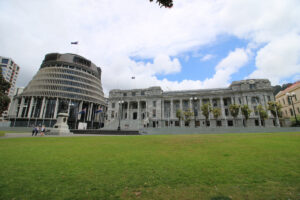
New Zealand Parliament is comprised of a series of buildings, including the recognizable Beehive. The complex also includes the Edwardian neoclassical-style Parliament House, which dates to 1922. For anyone interested in learning more about the New Zealand Parliament, visitors can take a tour of the complex. Tour guides offer a history of the legislative body and bring visitors to committee rooms and the floor of parliament.
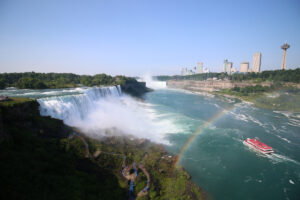
Niagara Falls is the name of a trio of waterfalls (Horseshoe Falls, the American Falls and the Bridal Veil Falls) straddling the border of the United States and Canada in upstate New York and southern Ontario. The falls formed roughly 10,000 years ago during the Wisconsinan glaciation, the North American ice sheet complex’s most recent glacial period. More than 20 million people visit Niagara Falls every year. The best-known tourist attraction at the falls is the Maid of the Mist, named for an ancient Ongiara Indian mythical character. The boat has transported passengers into the rapids immediately below the falls since 1846.
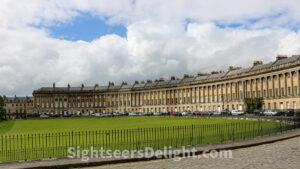
A famous semicircle row of Georgian townhouses was built based on designs by architect John Wood the Younger between 1767 and 1774. One of the houses, the No. 1 Royal Crescent, has been preserved as a museum, giving visitors a window into 18th century life. Complete with authentic furniture and artifacts, each room tells a story of daily life 300 years ago. In one of the rooms, the Gentlemen’s Retreat, visitors can learn more about Henry Sandford, the townhouse’s first resident who lived here from 1776 until 1796.
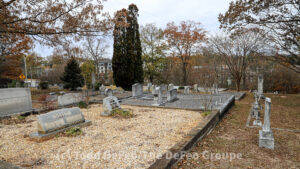
Milton C. Lively donated land for the cemetery around the time the city was established in 1870, naming the road leading to Cemetery Street. Initially, two streets connected the town to the cemetery: North Cemetery Street and South Cemetery Street. After Buford Highway was built in the 1930s, South Cemetery Street was renamed Carlyle Street; the portion of North Cemetery Street west of Buford Highway became Holcomb Bridge Road in 2012. In 1916, the city acquired an additional nine acres from Lively’s descendants, expanding the cemetery to its current size of roughly 3.5 acres. The remaining six acres were transformed into Cemetery Field for sporting events in the early 1970s, with renovations completed by Gwinnett County in 1986. Residents erected the pavilion at the cemetery entrance in 1922.
30071