
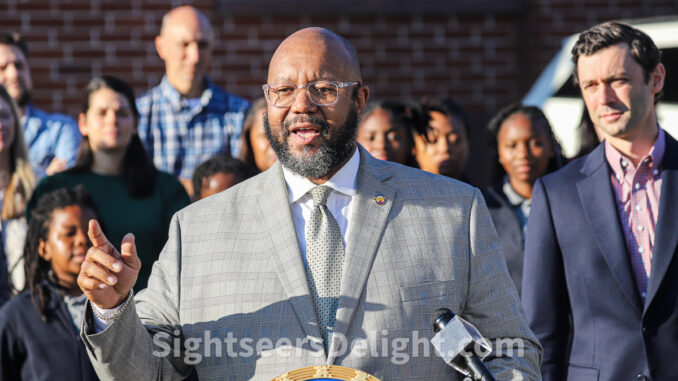
ATLANTA — Mayor Andre Dickens’ administration is pushing legislation aimed at expanding Atlanta’s enforcement options against blighted vacant properties, with supporters framing the measure as a stronger backstop for neighborhoods struggling with chronic neglect.
The proposal, sponsored by City Councilmember Byron D. Amos, builds on a 2024 ordinance that authorized the use of a community redevelopment ad valorem tax — commonly called the “blight tax” — on properties that meet state criteria for blight under Georgia law. City officials said multiple departments have since worked on an implementation plan, including designating City Solicitor Raines Carter as the public officer responsible for enforcing the program.
Under the policy, owners of vacant parcels designated as blighted would face a city property tax increase of 25 times. City officials said property owners would receive notice and have a limited window to correct cited conditions before the higher tax rate takes effect.
The administration said blighted properties can depress surrounding property values, attract criminal activity, reduce quality of life and increase demand on city services. Officials also said the tax would complement existing enforcement tools, including code enforcement citations, condemnation, nuisance prosecution and judicial in rem actions.
City officials said the program will be deployed strategically, with residents encouraged to report suspected blight through 311 so code enforcement can document conditions — a prerequisite for further action. The city said it plans to track results in the program’s first year and adjust its approach, with the expectation of expanding enforcement to additional properties and neighborhoods.