
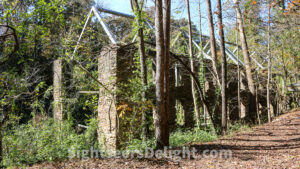
Concord Woolen Mills dates to 1847 when Robert Daniell and Martin Ruff opened the mill. The mill was destroyed on July 4, 1864, by Union Gen. William T. Sherman’s troops. The two men rebuilt the mill, which reopened in 1868. By 1870, the mill had 16 workers, making it the largest employer in the area. The two men sold the mill in 1872. The mill went out of business in 1916, and the ruins are located along what is today the Heritage Park Trail and Silver Comet Trail.
30082
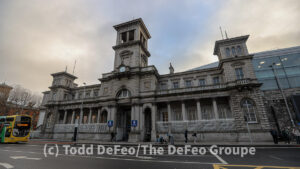
Connolly Station is Dublin’s busiest railway station and the central hub of Ireland’s rail network. Located on the north side of the River Liffey, it provides InterCity, Enterprise, and commuter services to destinations across the north, northwest, southeast, and southwest, while also serving the north–south DART line and the Luas Red Line. The station complex houses the headquarters of Iarnród Éireann, Irish Rail. Opened in 1844 as Dublin Station, Connolly is renowned for its ornate façade, featuring a distinctive Italianate tower at its center.
The Crime and Punishment Museum in Ashburn, Georgia, opened in August 2003 in a bucolic community of about 4,100 located along Interstate 75. The building — known to many as “Castle Turner” — served as the county jail from about 1907 until 1993. Miles Cribb was the only inmate hanged inside the jail. Today, visitors to the museum can see the trap door that dropped, sending the condemned Cribb to his death. They can also gaze upon the blood-stained collar he was wearing at the time he was executed and see a replica of an electric chair, affectionately nicknamed “Old Sparky.”
31714
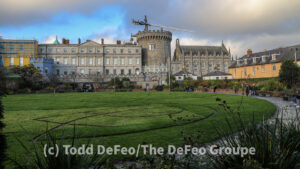
Dublin Castle, in the center of Dublin, stands on one of Ireland’s most important historic sites. The area is named for the Black Pool, or Dubh Linn, which lay where the River Liffey and the River Poddle met, near the present castle gardens. The site may first have held an early Gaelic fort and later a Viking stronghold. From 1204 until 1922, Dublin Castle served as the seat of English, and later British, rule in Ireland.
Although much of the medieval castle was destroyed in a fire in 1684, important parts of the earlier complex survive, including the 13th-century tower and medieval undercroft. After the fire, the State Apartments were built as the viceregal court’s residential quarters. They remain among the most significant ceremonial interiors in Ireland and are now used for presidential inaugurations, state visits and other official events.
The castle complex also includes the Chapel Royal and the gardens to the south, which add another layer to the site’s appeal. More than a single building, Dublin Castle preserves centuries of political, architectural and civic history at the heart of the Irish capital.
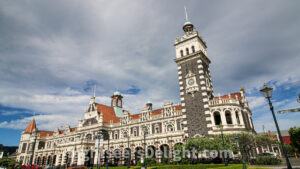
Dunedin railway station in Dunedin on New Zealand’s South Island, designed by George Troup, is the city’s fourth station. It is nicknamed “Gingerbread George.”
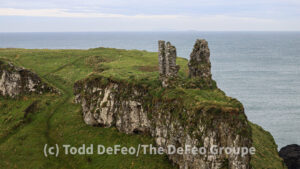
Dunseverick Castle is the site of an ancient stronghold on the Causeway Coast, with archaeological evidence of an Iron Age promontory fort and a long tradition identifying it as the northern endpoint of one of Ireland’s five great roads. Saint Patrick is said to have visited the site in the 5th century, baptizing Olcán, who later became a bishop. The fort was attacked by Viking raiders in 870 AD, and in the 6th century it served as the seat of Fergus Mór MacEirc, King of Dál Riata, a figure linked to the departure of the Lia Fáil to Scotland. The castle later passed to the Earls of Ulster, the O’Cahans and the McDonnells before being destroyed in the 1640s. Today, only the gate lodge ruins remain.
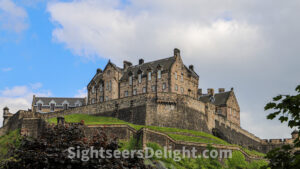
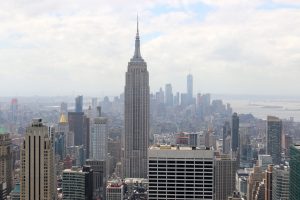
The Empire State Building is arguably the most iconic representation of Gotham City. The 102-story-tall skyscraper was built in 1930-31 and opened on May 1, 1931. It was the tallest man-made structure in the world until 1954 and today is the second-tallest skyscraper in New York and the fifth-tallest completed in the country. The view from the observation deck is awesome, to say the least.
Faneuil Hall, a meeting hall and marketplace since 1743, is best known as the site of speeches by Samuel Adams and others. The historic building, often called “the Cradle of Liberty,” is part of Boston National Historical Park and a favorite stop on the Freedom Trail. Peter Faneuil, a wealthy merchant, slave trader and philanthropist built Faneuil Hall and donated the edifice to Boston.
02109

Fenway Park is a historic baseball stadium located in Boston, Massachusetts. It is the oldest ballpark in Major League Baseball and is known for its unique features, such as the Green Monster, a 37-foot tall left-field wall. Fenway Park opened in 1912 and has hosted countless iconic moments in baseball history.
02215