
Overview
Bath is one of England’s best-known historic cities, shaped by Roman hot springs, medieval religious importance and Georgian architecture. Set in Somerset near the southern edge of the Cotswolds, the city is recognized twice by UNESCO, both as a World Heritage Site in its own right and as part of the Great Spa Towns of Europe.
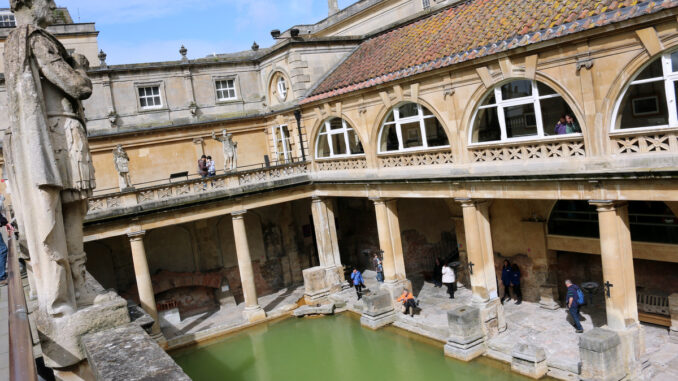
The Romans established the settlement of Aquae Sulis around natural thermal springs sacred to the Celtic goddess Sulis, and built an extensive bathing complex whose remains survive today. Bath later became an important medieval religious center, but its modern identity was largely formed during the Georgian period, when it emerged as a fashionable spa resort.
Much of the city’s distinctive appearance comes from that era, with grand terraces, crescents and neoclassical public buildings defining the center. Bath was damaged during World War II, but many of its major architectural landmarks survived or were restored. Today, the city combines historic attractions, museums, theaters, restaurants and university life within one of Britain’s most recognizable urban landscapes.
Latest Headlines
Attraction
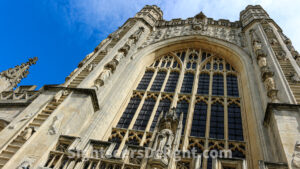
Bath Abbey
The imposing Gothic abbey, a former Benedictine monastery, towers high above the Roman baths and the street below.
Attraction
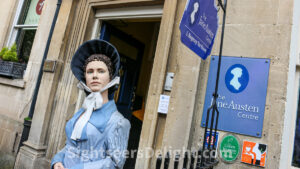
Jane Austen Centre
Author Jane Austen lived in Bath from 1801 until 1806, and the Jane Austen Centre on Gay Street explores the effect Bath had on Austen’s…
Attraction
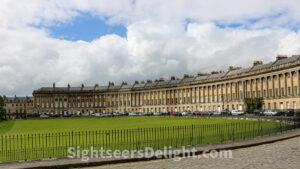
No.1 Royal Crescent
A famous semicircle row of Georgian townhouses was built based on designs by architect John Wood the Younger between 1767 and 1774.
Attraction
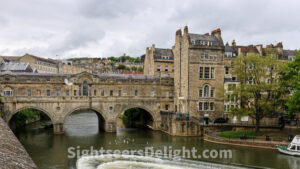
Pulteney Bridge
The Pulteney Bridge is a historic bridge in Bath, England, spanning the River Avon.
Attraction
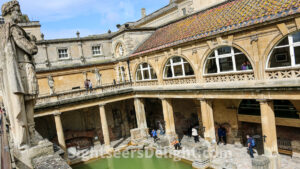
Roman Baths
The Roman Baths, for which this southwestern England city is named, are some of the most remarkable Roman ruins outside of Rome itself.
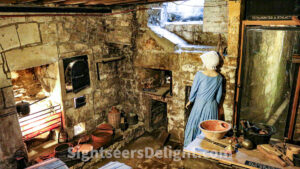
Attraction
Sally Lunn’s Historic Eating House
Sally Lunn's is a historic house in Bath, known as the oldest in the area, dating back to 1482.
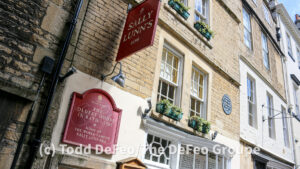
Restaurant
Sally Lunn’s Historic Bath Restaurant
Sally Lunn’s is a Historic Eating House and Tea Room in the oldest house in Bath, which dates to 1482.
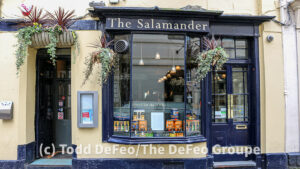
Restaurant
The Salamander
Home of an incredible line of Bath Ales’ beers, The Salamander, affectionately referred to as The Sally, is a quaint and charming pub in the…
