
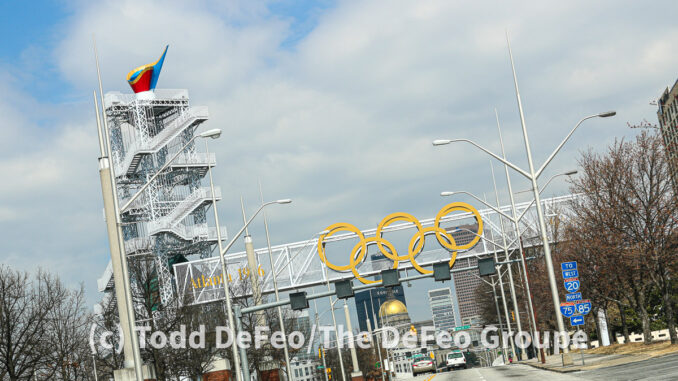
ATLANTA (Sightseers’ Delight) — Thirty years after Muhammad Ali lit the 1996 Olympic cauldron, Atlanta still argues over what to do with the oversized metal structure that some locals have dubbed the “French fry box.”
The latest battle erupted after Georgia State University announced plans to remove the cauldron from the top of the Flame Tower on Hank Aaron Drive and relocate it to Centennial Olympic Park downtown. Former Mayor Andrew Young and Olympic organizer Billy Payne backed the move, arguing that moving the artifact to the park makes perfect sense for tourists looking to relive the city’s 1996 glory days.
Naturally, the surrounding neighborhoods didn’t get the memo, and they are not happy about losing their history.
Residents in Summerhill, Peoplestown, and Mechanicsville quickly pointed out that their communities bore the brunt of the Olympic construction, traffic, and displacement back in the 1990s. Leaving the cauldron, designed by artist Siah Armajani, behind was one of the few tangible prizes the neighborhood got to keep after Centennial Olympic Stadium was converted into Turner Field for the Braves, and later reconditioned into Georgia State’s football stadium.
While Georgia State promised to enhance the remaining 120-foot tower base, local activists began gathering signatures and staging protests to block the move. The Atlanta City Council even passed a resolution calling for a full pause on the project, though city officials awkwardly admitted they lack the legal authority to stop it.
“Georgia State is honored to help preserve and advance Atlanta’s Olympic legacy,” Georgia State President M. Brian Blake said earlier this year, according to Fox 5 Atlanta. “The story of the Olympic Flame Tower is also the story of Summerhill and Georgia State’s evolution.
“As we continue investing in this community, we are committed to celebrating the history that shaped Atlanta while creating new opportunities for students, residents and visitors,” Blake added. “This project reflects both preservation and progress.”
Even Atlanta Mayor Andre Dickens jumped into the fray, sending a stern letter urging organizers to abandon the relocation and respect the neighborhood’s history.
The squabble proves that three decades later, managing Atlanta’s Olympic legacy is almost as complicated as hosting the Games themselves.
“This magnificent structure will continue to serve as a reminder of the important role that this part of Atlanta played in the execution and the memories of the 1996 Centennial Olympic Games,” Payne, chairman of Atlanta ’96 Legacy, said, according to 11 Alive.



Be the first to comment