
Guidebooks are annoying. Just because some editor who doesn’t know me tells me which restaurant is the best or what attraction is a must-see doesn’t make it a must-see attraction. Sightseers’ Delight is dedicated to the weird, the quirky and the fun. After all, traveling is fun.
If it’s not, you’re doing it wrong.
All of the places highlighted in this ever-growing database are great. Sightseers’ Delight has visited them all. We think you should make a point to see every one of them. But, this is not a guidebook. Just a webpage to help you plan your next adventure.
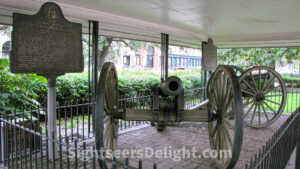
George Washington sent a pair of bronze six-pounder cannons to Savannah after he visited the city in 1791 as part of his so-called “Southern Tour” following his inauguration. Affectionately called “George” and “Martha” after the nation’s first president and his wife, the guns — one British and one French — were given to the Chatham Artillery. In 1825, there was a push to send the guns to Augusta, but they remained in Savannah. According to one account, the guns were buried in 1861 uncovered in 1872.
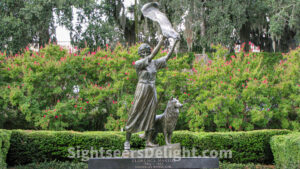
Savannah’s Waving Girl Statue is a tribute to Savannahian Florence Martus. Between 1887 and 1931, Martus would wave a cloth at ships approaching Savannah from the lighthouse on Cockspur Island. She did this in hopes of catching a glimpse of her long-lost lover. Although she was not well known in her community, her fame spread worldwide among maritime communities. Ships passing through the area would return her greetings by sounding a blast from their horns. Even today, many ships still pay tribute to her statue.
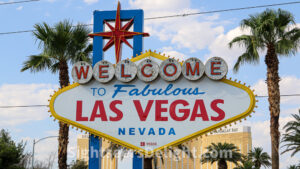
No trip to Vegas would be complete without seeing the “Welcome to Fabulous Las Vegas” sign. Built in 1959, the sign is one of the most popular symbols of Las Vegas. The sign, which was added to the National Register of Historic Places in 2009, is located in the middle of Las Vegas Boulevard, roughly a mile from Mandalay Bay on the southern end of The Strip.
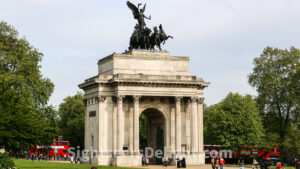
Wellington Arch in London’s Hyde Park Corner was built between 1826 and 1830 and moved to its present location in 1883-83. The Arch, initially known as the Green Park Arch and is also known as the Constitution Arch, was at one time the entrance to Buckingham Palace. It later became a victory arch for Wellington’s defeat of Napoleon. The structure initially supported a colossal equestrian statue of the 1st Duke of Wellington by Matthew Cotes Wyatt. Since 1912, a bronze “Quadriga,” an ancient four-horse chariot, by Adrian Jones has sat atop the arch.
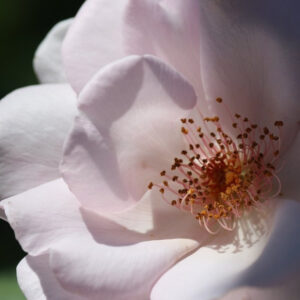
The 25-hectare Wellington Botanic Garden in Wellington on the side of the hill between Thorndon and Kelburn. The garden, established in 1868 and classified as a Garden of National Significance by the Royal New Zealand Institute of Horticulture, features a range of protected native forests, plants and seasonal displays. It also features a variety of non-native species, including the extensive Lady Norwood Rose Garden.
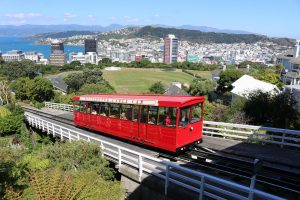
Since it opened in 1902, the Wellington Cable Car has been a symbol of the city. The roughly 2,000-foot-long cable car rises 394 feet above Windy Wellington, taking riders from the heart of New Zealand’s capital city to the Kelburn neighborhood. The cable car, which moves at a constant rate of nearly 18 percent, opened to encourage new residents to move into Kelburn, which was a new neighborhood at the time. By the 1960s and 1970s, there were concerns about the safety of the funicular. But, the cable car was rehabilitated and returned to its former glory. At the top, be sure to visit the Cable Car Museum to learn more about its history.
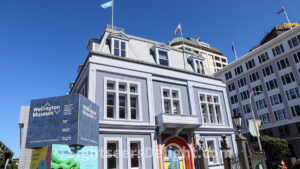
For anyone interested in learning more about the history of Wellington, the Wellington Museum is an absolute must. The centerpiece of the museum is the building itself. The museum is located in the Bond Store, which sits in the heart of Wellington’s waterfront district. Leading architect Frederick de Jersey Clere designed the 1892 heritage building. The museum features a mix of stories about the community of Wellington and maritime history, including information about the 1968 Wahine disaster, a deadly ferry disaster that claimed the lives of 53 passengers.
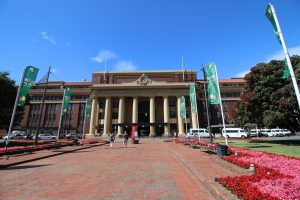
Wellington railway station is the main railway station serving Wellington, New Zealand, and is the southern terminus of the North Island Main Trunk, Wairarapa Line and Johnsonville Line. The station opened in June 1937, replacing the previous Wellington termini, Lambton and Thorndon.
West Coast Railway Heritage Park is the second largest railway museum in Canada and home to more 90 pieces of vintage railway equipment, including Royal Hudson No. 2860, one of 65 Hudson Class (4-6-4) locomotives, Montreal Locomotive Works built for Canadian Pacific Railway starting in 1929.
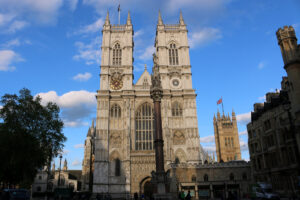
The Collegiate Church of St Peter at Westminster, better known as Westminster Abbey, was built in the 10th century. British monarchs have held their coronations at Westminster Abbey since 1066. Among the artifacts on display is King Edward’s Chair (or St Edward’s Chair), the throne on which English and British sovereigns have been seated when crowned and has been used at every coronation since 1308. The Abbey has been the site of at least 16 royal weddings since King Henry I married Matilda of Scotland on Nov. 11, 1100.