
Guidebooks are annoying. Just because some editor who doesn’t know me tells me which restaurant is the best or what attraction is a must-see doesn’t make it a must-see attraction. Sightseers’ Delight is dedicated to the weird, the quirky and the fun. After all, traveling is fun.
If it’s not, you’re doing it wrong.
All of the places highlighted in this ever-growing database are great. Sightseers’ Delight has visited them all. We think you should make a point to see every one of them. But, this is not a guidebook. Just a webpage to help you plan your next adventure.
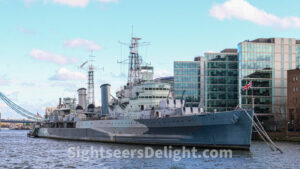
The Royal Navy light cruiser HMS Belfast was commissioned on Aug. 5, 1939, and built by Harland and Wolff shipyard in its namesake city of Belfast. This is the same company that built another famous ship, the Titanic. The Belfast saw action during some of the most pivotal battles of World War II, including the invasion of Normandy on June 6, 1944.

No trip to Toronto is complete without a visit to the Hockey Hall of Fame. The museum — known as the Temple de la renommée du hockey in French — dates to 1943 and has been in its current location on Yonge Street in the heart of Toronto since 1993. There are roughly 400 people — including players, builders and referees — inducted into the Hall of Fame. The 60,000-square-foot museum is home to heaps of memorabilia, helping to tell the story of hockey from its earliest days to modern times.
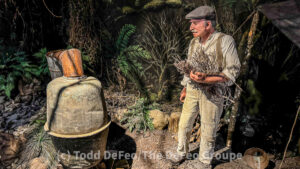
The Hokonui Moonshine Museum in Gore, New Zealand, explores one of Southland’s most colorful stories: the long tradition of illicit whisky making in the Hokonui Hills. Located in Gore’s heritage precinct, the museum brings together artifacts, recreated scenes, audio and visual displays to tell the story of the region’s prohibition-era bootleggers and the officials who tried to stop them. The Gore Visitor Centre serves as the front entrance to the museum.
The story includes the exploits of the McRae family, whose illegal distilling operations became part of New Zealand folklore after decades of dodging police and customs officers. Research for the museum began in the 1990s, when oral histories and archival records helped separate legend from fact and document more than 30 prosecutions under distillation laws. The museum opened in 2000 as a social history attraction focused on that unusual past.
In recent years, the site has expanded beyond interpretation alone. The museum now also includes a legal distillery, allowing visitors to connect the old Hokonui story with a modern expression of the spirit once made in secret.
Built at a cost of $49 million — or $821 million with inflation — the Hoover Dam stops the Colorado River to create Lake Mead, itself a popular attraction. It has been open to visitors since 1937, and today, roughly 1 million people visit annually; the busy season falls between Memorial Day and Labor Day. Located roughly 35 miles east of Las Vegas, the Hoover Dam is an easy — and worthwhile — day trip from Sin City. A number of tour groups offer sightseeing excursions from Vegas hotels for those travelers who don’t have access to a vehicle.
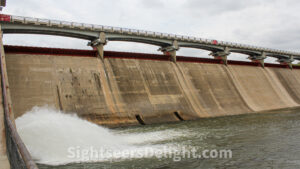
Hoover Dam dams the Big Walnut Creek, forming the Hoover Memorial Reservoir, which holds 20.8 billion gallons of water. Construction began during 1953; the dam was dedicated in 1955 and officially opened in 1958. It was named for brothers Charles P. Hoover and Clarence B. Hoover in honor of their careers with the City of Columbus Waterworks.
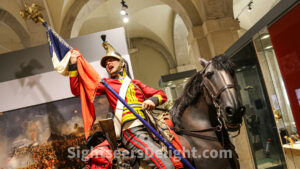
The Household Cavalry Museum preserves and interprets the history of the Regiments of the Household Cavalry, which dates back more than 350 years. The museum opened in June 2007 in the historic Horse Guards building. The museum includes working stables in addition to an extensive collection of historical artifacts.
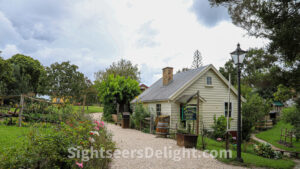
Howick Historical Village is a living museum in Auckland, New Zealand. It is a re-creation of a New Zealand colonial village using surviving buildings from the surrounding area. Despite its name, the Village is actually located in the suburb of Pakuranga.
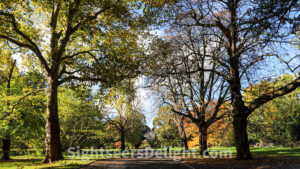
Hyde Park is a historic Grade I-listed urban park in Westminster, Greater London, spanning more than 350 acres. This park and green space stretches from Kensington Palace to St James’s Park and, along with Kensington Gardens, Hyde Park, Hyde Park Corner, Green Park, and Buckingham Palace, forms a chain of greenspace. It is divided by the Serpentine and the Long Water lakes. Henry VIII established the park in 1536, taking the land from Westminster Abbey and using it as a hunting ground. It opened publicly in 1637 and quickly became popular, particularly for May Day parades. In the early 18th century, Queen Caroline directed major improvements to the park. During this time, the park was frequently used for duels, particularly by members of the nobility.
The lush, stream-cut Iao Valley is located about three miles west of Wailuku. Thanks to its natural environment and history, the valley has become a popular tourist location. It was designated a National Natural Landmark in 1972.