
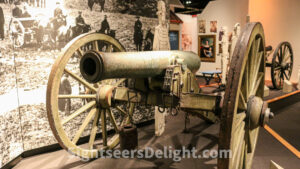
The Tennessee State Museum highlights the history of Tennessee starting from pre-colonization and into the 20th century. The museum interprets the Frontier, the age of President Andrew Jackson and the American Civil War.
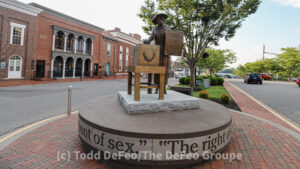
Tennessee Triumph on Public Square in downtown Clarksville, Tennessee, commemorates the centennial of the ratification of the 19th Amendment and the women who helped secure the right to vote. The monument was unveiled and dedicated on Aug. 15, 2020, as part of Clarksville’s observance of the anniversary and to establish the city as a stop on Tennessee’s Woman Suffrage Heritage Trail, which runs from Chattanooga to Memphis.
The 7-foot bronze statue is 1.25 times life size and depicts a woman casting her first ballot. She faces F&M Bank on Public Square, placing her vote in a ballot box while holding a scroll reading, “Women use your vote.” Rather than honoring a single individual, the monument commemorates the Clarksville women who worked for suffrage and participated in that first election after ratification.
The project was led by the Tennessee Triumph Steering Committee, a group of 20 women community leaders who spent two years raising money and guiding the effort. Ellen Kanervo and Brenda Harper helped organize the committee, which ultimately selected a design by Phoenix- and Nashville-based artist Roy Butler. The statue is Clarksville’s 27th piece of public art.
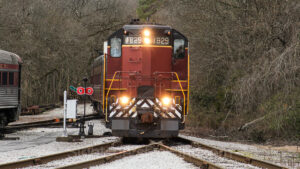
The Tennessee Valley Railroad Museum is the largest operating historic railroad in the Southeast. Designated the Official Railroad Museum of Tennessee, TVRM trains operate over rails that were first laid in 1856, and trains pass through the 979-foot-long Missionary Ridge Tunnel, an exceptional feat of engineering when it opened in the 19th century.
37421
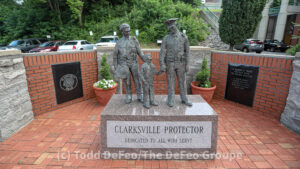
The Clarksville Protector statue in downtown Clarksville, Tennessee, stands next to the Clarksville Police Department as a memorial to the city’s fallen law enforcement officers. Unveiled during a ceremony honoring officers killed in the line of duty, the bronze work depicts real Clarksville police officers rather than generic figures, giving the monument a strong local identity and making it more than a symbolic tribute.
The statue grew out of an idea from Clarksville Police Officer Jackie Ashby, who was inspired during a trip to Washington, D.C., with her husband, Lt. Phil Ashby. She later connected with Brodin Studios of Minnesota, founded by brothers Roger and Neil Brodin, former Minneapolis police officers whose artwork has become well known in law enforcement and public safety circles. Their Protector pieces have appeared in cities across the country.
In Clarksville, the sculpture shows an officer holding a child’s hand, an image meant to reflect both protection and compassion. It also serves as a reminder of the officers the city has lost over the years. Seven Clarksville police officers and one K-9 have been killed in the line of duty.
37040
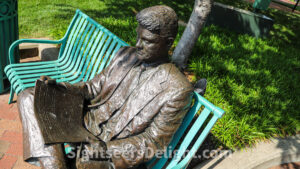
Clarksville firefighter and sculptor Scott Wise created “The Day After,” also known as “The Seated Piece.” Main Street Clarksville commissioned the public art, the group’s last. The statue’s title refers to January 23, 1999, the day after a tornado struck downtown Clarksville. The statue, described by the artist as “Joe Public,” is reading a replica of the January 23, 1999 edition of The Leaf-Chronicle newspaper, which is located across Commerce Street from the statue. The statue was formally unveiled on October 30, 2003, and Main Street Clarksville donated it to Montgomery County after its unveiling.
37040
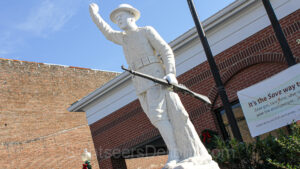
The Doughboy statue on display in downtown Clarksville dates to 1929. It features an American soldier holding a grenade in one hand and a rifle in the other and honors the soldiers who fought in World War I. For more than 40 years, it stood guard in front of Clarksville High School and was moved to the armory on Ft. Campbell Boulevard in 1972. On April 15, 2010, city and civic leaders rededicated the statue at its new location in front of the Transit Station on Legion Street in downtown Clarksville. In 2015, it moved to a new location at the Tennessee State Veterans Home.
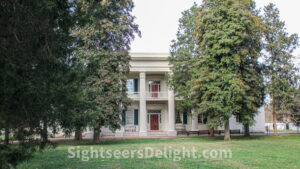
Andrew Jackson built the original Hermitage in 1804, more than a decade before the Battle of New Orleans during the War of 1812 and more than 20 years before he was elected the nation’s seventh president. The current mansion was built between 1819 and 1821 and later underwent major renovations in 1831 and after an 1834 fire heavily damaged much of the house. The current Greek revival look of the house dates to 1835. Jackson — nicknamed “Old Hickory” — retired from public life in 1837, and he lived in The Hermitage until his death in 1845. Jackson and his wife, Rachel, who preceded him in death, are buried on the grounds.
37076
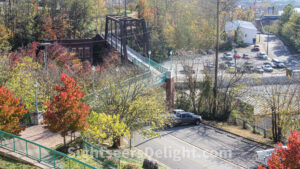
The Upland Trail is a walking path in the heart of downtown that dates to the late 1990s. The trail currently links the Riverwalk to an overlook bridge at the north end of Valleybrook Park. The initial portion of the project extended the trail from the pedestrian overpass on Riverside Drive and College Street, alongside many of Clarksville’s historical buildings and homes, and uses a former railroad bridge near the park. The remainder of Phase II will eventually continue the trail into Valleybrook Park.
37040
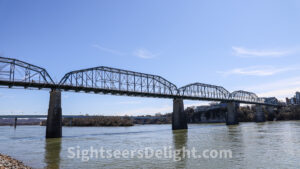
The 2,376-foot-long Walnut Street Bridge, constructed between 1889 and 1891, was the first to connect Chattanooga, Tennessee’s downtown with North Chattanooga (or North Shore). According to the Historic American Engineering Record, “The bridge was apparently the first non-military highway bridge across the Tennessee River.” Streetcars formerly ran across the bridge, which was open to vehicle traffic until May 11, 1978. The bridge was the site of two lynchings, Alfred Blount on February 14, 1893, and Ed Johnson on March 19, 1906.
37321