

The 4,200-square-foot museum, located in Hilliard, Ohio, a western suburb of Columbus, boasts more than 150 television sets, including mechanical sets from the 1920s and American and British equipment from the 1930s, 1940s and 1950s. Many of the sets are in working order. The museum’s most popular exhibits include the collection of early color sets, a DuMont Royal Sovereign, the working Baird mechanical set and the RCA remote telecasting van. The Early Television Foundation, a non-profit organization that operates the museum, is always looking to expand its collection of equipment.
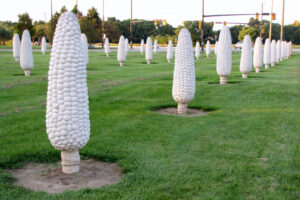
Malcolm Cochran created “Field of Corn (with Osage Orange),” which debuted in 1994 and as part of a project commissioned by the Dublin Arts Council. The field features 109 rows of corn measuing six feet tall or taller. Sam Frantz, a pioneer of hybrid corn and his wife, Eulalia, previously owned the land and grew corn here. Since debuting, the project wasn’t without its share of controversy.
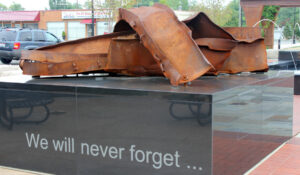
In the heart of Hilliard, a bucolic Columbus suburb, stands what is said to be one of the largest Sept. 11 memorials. First Responders Park Memorial is dedicated to first responders nationwide and aims to remind visitors that no matter where they live, they have a stake in what happened on Sept. 11. One of the memorial’s features is a trio of granite walls inscribed with the names of those who lost their lives in the attack. In addition, steel from the World Trade Center was incorporated into the memorial.
43026
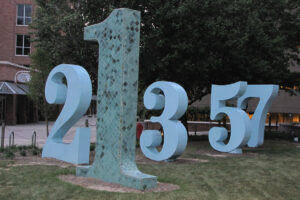
Arizona artist Barbara Grygutis created the Garden of Constants, located at the College of Engineering. The garden, installed in 2004, features two main elements: 10 large number sculptures numbers and symbols set into the pavement. The Ohio State University Percent for the Arts commissioned the sculpture. The work is located outside of Dreese Lab, home to the Computer and Information Science and Electrical Engineering departments.
43210
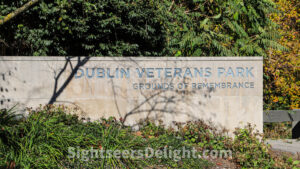
The Grounds of Remembrance in Historic Dublin, Ohio, honors those who served the country in war and peace. The park spans approximately one acre and is adjacent to passive parkland, the Dublin Public Library, the Indian Run Cemetery, and Dublin Road. The Grounds of Remembrance includes the Recognition Walk, which features 500 dedication stones to honor veterans.

Hoover Dam dams the Big Walnut Creek, forming the Hoover Memorial Reservoir, which holds 20.8 billion gallons of water. Construction began during 1953; the dam was dedicated in 1955 and officially opened in 1958. It was named for brothers Charles P. Hoover and Clarence B. Hoover in honor of their careers with the City of Columbus Waterworks.
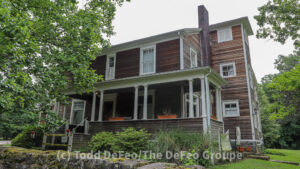
Benjamin O. Greene and Salmon Hoisington built this house circa 1830. The Perkins family, a well-known local family, rented it from 1835 to 1837 as their Stone House (now known as the Perkins Stone Mansion) was being built. Colonel Simon Perkins purchased the house, which was originally a two-room structure, in early 1844 and then rented it to abolitionist John Brown and his family. Brown, recovering from bankruptcy in 1844, entered into a wool partnership with Perkins. Brown lived in the house on and off from 1844 until 1854. The house was expanded over the years, and the Portage Golf Club, a Portage Country Club predecessor, operated in the house for more than two decades, starting in 1884.
44320
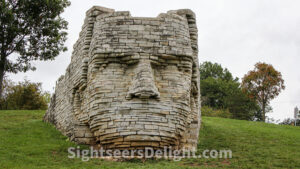
Leatherlips is one of Ohio’s great historic legends. He was executed in on June 1, 1810, though the precise location is open to some debate. To honor the great Wyandot Native American Chief, the Dublin, Ohio, community in 1990 unveiled a 12-foot high sculpture of Leatherlips’ head. Designed by Boston artist Ralph Helmick and located in Scioto Park, the portrait was made using stacked native limestone. The top is open with stacked stones extending back along its sides, making for a popular picture stop.
43065
Located along the historic Ohio & Erie Canal, Lock 2 is one of roughly 20 locks that once lifted and lowered canal boats through the center of Akron. The lock played a vital role in the 19th-century canal system that linked Akron to Lake Erie in Cleveland and later to the Ohio River near Portsmouth, creating important trade routes that helped the region rapidly grow. Today, Lock 2 is easily accessible along the scenic Towpath Trail, positioned between Akron Children’s Hospital and Canal Park Stadium.
44308
The Matthews Hotel Monument, located at North Howard Street and Martin Luther King Jr. Boulevard, honors one of Akron’s most important cultural landmarks. From the 1930s through the 1950s, the Matthews Hotel welcomed legendary jazz musicians who performed in the city while traveling between major gigs in New York and Chicago. Icons such as Cab Calloway, Louis Armstrong, Count Basie and Ella Fitzgerald stayed here during an era when segregation prevented Black performers from lodging in white-only downtown hotels. The original hotel was demolished in 1982. Akron artist Miller Horns, who passed away in 2012, dedicated his life to ensuring its legacy lived on. Construction of the monument began in 2011 with support from local contractors who donated labor and materials.