No Picture

Founders Park

The 60-acre Founders Park sits on the site where the original “founders” of Rapid City camped in 1876. Most of the land, which serves as a trailhead for paths along Rapid Creek, was acquired following the 1972 Flood.

No Picture

Rose Fitzgerald Kennedy Greenway

The Rose Fitzgerald Kennedy Greenway opened in October 2008 atop the Big Dig, the country’s most expensive highway project, in the heart of Boston. The 17-acre Greenway, named after Rose Fitzgerald Kennedy, features plazas and a tree-lined promenade. The matriarch of the Kennedy Family was born in the neighboring North End neighborhood. Her son, former Sen. Ted Kennedy, a liberal from Massachusetts, was instrumental in establishing the Greenway.
No Picture

Boston Common

Boston Common, often called the Common, is a central public park in Boston. It dates to 1634 and is the oldest city park in the country and declared a U.S. National Historic Landmark in 1987. Throughout history, the park has served as a meeting place for protests dating back to at least the early 18th century,

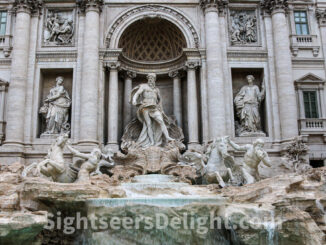
Fontana di Trevi

Nicola Salvi in 1732 won a competition to design a new fountain in the Trevi district of Rome. Giuseppe Pannini completed the fountain in 1762. Legend says anyone who tosses a coin into the fountain’s waters will return to Rome. The fountain, featured in countless movies, was built on the site of an earlier fountain.
No Picture

Fort Lowell Park

Fort Lowell Park is home to the extant remains of the former Fort Lowell military post. The United States Army established the Post of Tucson in May 1862; they abandoned it in July 1864 but re-established it a year later. In August 1866, the Army named the installation renamed Camp Lowell in honor of Gen. Charles Russell Lowell. In March 1873, the Army moved the post to its current location, then located on the outskirts
No Picture

Bryant Park

The 9.6-acre Bryant Park is unique in that it is part of the New York City Department of Parks and Recreation but privately managed. Located adjacent to the New York City Public Library, the history of the park dates to 1686, when Thomas Dongan, New York’s colonial governor, designated the area a public space. George Washington’s troops crossed the area while retreating from the Battle of Long Island in 1776, and in 1823, the site