
Guidebooks are annoying. Just because some editor who doesn’t know me tells me which restaurant is the best or what attraction is a must-see doesn’t make it a must-see attraction. Sightseers’ Delight is dedicated to the weird, the quirky and the fun. After all, traveling is fun.
If it’s not, you’re doing it wrong.
All of the places highlighted in this ever-growing database are great. Sightseers’ Delight has visited them all. We think you should make a point to see every one of them. But, this is not a guidebook. Just a webpage to help you plan your next adventure.
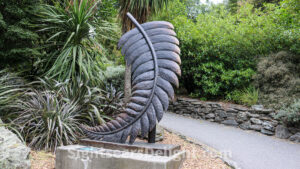
Queenstown Gardens contains a mixture of exotic and native trees and plants, which visitors can enjoy from the garden’s variety of trails. In addition to its flora, the gardens offer beautiful views of Lake Wakatipu, the Frankton Arm and Queenstown. The first mayor of Queenstown, James W. Robertson, and the nurseryman at the time, Mr. McConnochie, planted the first two trees, English oaks, in the gardens in 1866 to celebrate the incorporation of the borough. However, the gardens did not officially open until 1867, and significant planting started at that time.
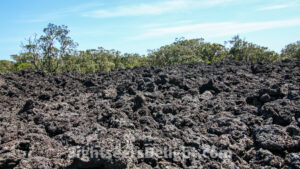
Rangitoto Island is a 3.4-mile-wide volcanic island in the Hauraki Gulf near Auckland that reaches s height of 850 feet. The 5,710-acre island is the youngest and largest of the roughly 50 volcanoes of the Auckland volcanic field. It last erupted approximately 600 years ago. Rangitoto is named for the Māori word for ‘Bloody Sky. Its name is derived from the full phrase Ngā Rangi-i-totongia-a Tama-te-kapua , which means The days of the bleeding of Tama-te-kapua. Today, the island is a popular destination for visitors to Auckland, and ferries depart regularly from the city.
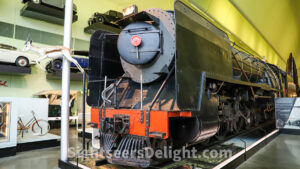
Riverside Museum in Glasgow, Scotland, showcases Glasgow’s rich transportation and technology collections. This museum boasts a collection of more than 3,000 objects highlighting the city’s contributions to heavy industries like shipbuilding, train manufacturing, and engineering. Architect Dame Zaha Hadid designed the museum, located where the Rivers Kelvin and Clyde meet and was designed by the talented a. After a four-year build, the museum opened its doors in 2011 and has since been a popular destination for locals and tourists alike.
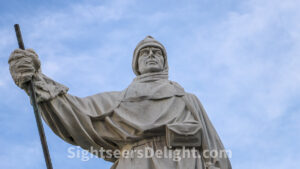
Captain Robert Falcon Scott was a British Royal Navy officer and explorer who led two expeditions to the Antarctic regions: the Discovery expedition of 1901-1904 and the ill-fated Terra Nova expedition of 1910-1913. His widow, Kathleen Scott, sculpted a statue of Robert Falcon Scott that stands at the intersection of Oxford Terrace and Worcester Street in Christchurch. The statue was completed in Carrara, Italy, in April 1916, but was not shipped until October 1916 because of World War I. The statue was damaged in the February 2011 Christchurch earthquake and was reinstated in October 2017.
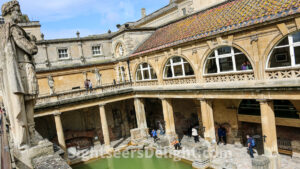
The Roman Baths, for which this southwestern England city is named, are some of the most remarkable Roman ruins outside of Rome itself. The area’s natural hot springs were used long before the Romans under Emperor Claudius invaded Britain, starting in 43 AD. Archaeological evidence shows human activity around the springs dating to 8,000 BC, though the area may have been too hot and swampy for a permanent settlement. Today, the Roman ruins stand at the center of this historic city. Much like their counterparts in Rome itself, the bath ruins provide a marvelous insight into both the magnificence of the buildings constructed by the Romans and daily life during Roman times.
The Rose Fitzgerald Kennedy Greenway opened in October 2008 atop the Big Dig, the country’s most expensive highway project, in the heart of Boston. The 17-acre Greenway, named after Rose Fitzgerald Kennedy, features plazas and a tree-lined promenade. The matriarch of the Kennedy Family was born in the neighboring North End neighborhood. Her son, former Sen. Ted Kennedy, a liberal from Massachusetts, was instrumental in establishing the Greenway.
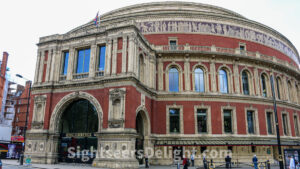
The Royal Albert Hall is a renowned concert hall in northern South Kensington, London. It is considered one of the UK’s most precious and recognizable buildings. The hall is managed by a registered charity that doesn’t receive government funding and is held in trust for the nation. It has a seating capacity of 5,272 people.
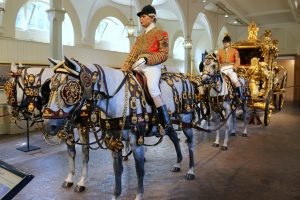
The Royal Mews is the home of the stables, carriage house and garage of the British Royal Family. The Royal Mews is in the grounds of Buckingham Palace, to the south of Buckingham Palace Gardens, near Grosvenor Place. George III moved some of his day-to-day horses and carriages to the grounds of Buckingham House in the 1760s.