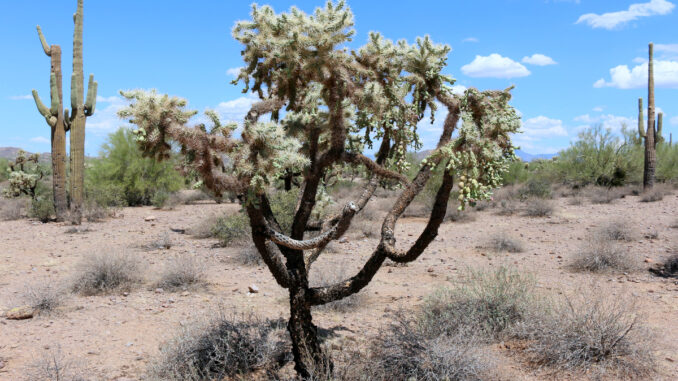
Lost Dutchman State Park in Apache Junction, Ariz. (Photo by Todd DeFeo/The DeFeo Groupe)
Guidebooks are annoying. Just because some editor who doesn’t know me tells me which restaurant is the best or what attraction is a must-see doesn’t make it a must-see attraction. Sightseers’ Delight is dedicated to the weird, the quirky and the fun. After all, traveling is fun.
If it’s not, you’re doing it wrong.
All of the places highlighted in this ever-growing database are great. Sightseers’ Delight has visited them all. We think you should make a point to see every one of them. But, this is not a guidebook. Just a webpage to help you plan your next adventure.
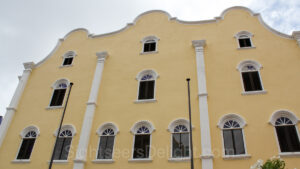
One might not expect to find a large Jewish population in the middle of a Caribbean paradise. But Curacao is home to the “oldest synagogue building in continuous use in the Western Hemisphere,” and the Mikve Israel Emanuel Synagogue & Jewish Museum chronicles the congregation’s history.
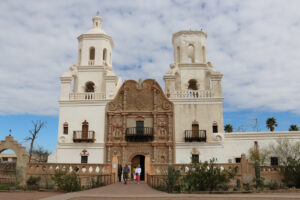
Jesuit missionary Eusebio Francisco Kino founded Mission San Xavier del Bac in 1692. Kino, a Jesuit of Italian descent, often visited the area and preached to native residents. He began building a permanent mission around 1700, but the current building was constructed between 1783 and 1797 and is the oldest European structure in Arizona. The building features a white stucco and Moorish-inspired exterior with an ornately decorated entrance. Franciscans still actively run the church, unlike other Spanish missions in Arizona. The church, nicknamed “The White Dove of the Desert,” is on the Tohono O’odham Nation San Xavier Indian Reservation.
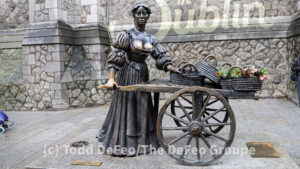
The Molly Malone statue stands on Suffolk Street, steps from Trinity College and Grafton Street. Molly Malone herself is a semi-historical, semi-legendary figure immortalized in the beloved ballad “Cockles and Mussels,” a song sung so widely that it’s often treated as Dublin’s unofficial anthem. Her tragic story — and the image of her pushing her barrow — has become one of the city’s most recognizable symbols.
The Monastery of the Holy Spirit is located in the eastern Atlanta suburb of Conyers and is often referred to as “Georgia’s Most Remarkable Concrete Building.” The community was started on March 21, 1944, by 21 trappist monks who relocated to land donated by media mogul Henry Luce and the Archdiocese of Atlanta from Gethsemani Abbey in Kentucky. The Monastery itself was built between 1944 and 1949, the Monastery. A 17,000-square-foot Heritage Center, which opened in 2011, includes information about the history of the Monastery, a bonsai nursery and a café. Visitors looking to take home a piece of the experience need to stop by the gift shop or the bonsai nursery.
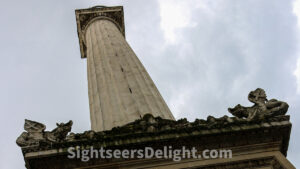
The Monument to the Great Fire of London commemorates the Great Fire of London, which started on Sept. 2, 1666. The Monument, as it is colloquially known, was built between 1671 and 1677 on the site of St. Margaret’s, the first church the Great Fire destroyed, and 202 feet west of where the Great Fire started. The Monument is a fluted Doric column built of Portland stone. It is 202 feet tall and topped with a gilded urn of fire.
MOTAT – Museum of Transport and Technology – opened in 1964, and is the largest museum of transport, technology and social history in New Zealand. It houses a number of outstanding collections.
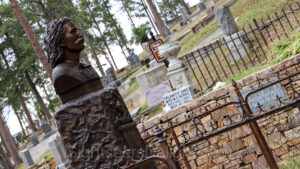
Mount Moriah Cemetery, established in 1878 in Deadwood, South Dakota, is the final resting place of several famous Wild West figures, including Wild Bill Hickok, Calamity Jane and Seth Bullock. Some bodies initially buried in Ingelside Cemetery, another cemetery in Deadwood, were relocated to Mount Moriah Cemetery in the 1880s. The cemetery, which sits on a plateau overlooking Deadwood Gulch, has several sections, including a Jewish section and a Potter’s field.