
Guidebooks are annoying. Just because some editor who doesn’t know me tells me which restaurant is the best or what attraction is a must-see doesn’t make it a must-see attraction. Sightseers’ Delight is dedicated to the weird, the quirky and the fun. After all, traveling is fun.
If it’s not, you’re doing it wrong.
All of the places highlighted in this ever-growing database are great. Sightseers’ Delight has visited them all. We think you should make a point to see every one of them. But, this is not a guidebook. Just a webpage to help you plan your next adventure.
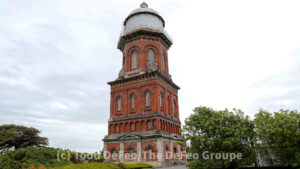
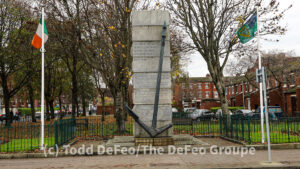
The Irish Merchant Navy Memorial in Dublin commemorates the seamen who died while serving on Irish merchant ships during the Second World War, a period known in Ireland as the Emergency. The memorial stands on City Quay at the corner of Lombard Street East and consists of a granite monument with an anchor set in front, placing it firmly within Dublin’s docklands and its long maritime history.
The monument honors the crews who kept supplies moving to and from neutral Ireland during the war despite the dangers at sea. According to RTÉ, 16 ships were lost between 1939 and 1945, and 149 men died. The service of the Irish mercantile marine during those years became known among mariners as the Long Watch, a phrase that captured both the risk and the endurance of those voyages.
An annual commemoration is still held at the City Quay memorial in November, continuing the site’s role as a place of public remembrance. More than a docklands monument, it marks a wartime story in which Irish seamen helped sustain the country through years of isolation, shortage and uncertainty.
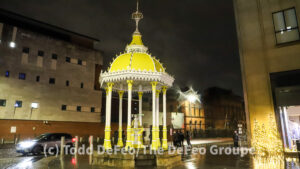
The Jaffe Fountain dates to 1874, the same year as the death of its namesake, Daniel Joseph Jaffe, a German merchant who arrived in Belfast in 1850 to establish a linen export business. The fountain originally stood in Victoria Square, where it commemorated Jaffe’s role as the founder of Belfast’s Jewish community and the builder of the city’s first synagogue in 1871. In 2007, the monument was taken to Shropshire, England, for restoration due to its deteriorated condition and was returned to its original location in February 2008. Jaffe’s legacy also includes his son, Otto Jaffe, who served twice as Lord Mayor of Belfast and remains the city’s only Jewish Lord Mayor.
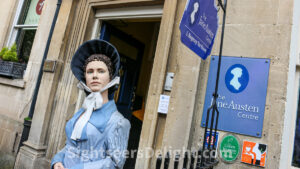
Author Jane Austen lived in Bath from 1801 until 1806, and the Jane Austen Centre on Gay Street explores the effect Bath had on Austen’s writings. The museum is certainly a must-see for Austen fans, but it’s also for visitors looking to learn more about historic Bath through the experiences of one of its favorite residents.
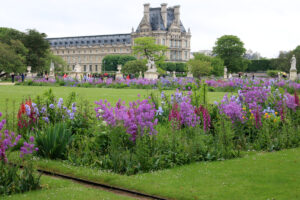
The Tuileries Garden is a public garden located between the Louvre and the Place de la Concorde in the 1st arrondissement of Paris. Catherine de’ Medici created the garden at the Tuileries Palace in 1564, and it opened to the public in 1667. Following the French Revolution, the garden became a public park.
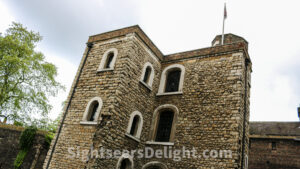
The 14th century Jewel Tower was one part of the royal Palace of Westminster. The edifice was built between 1365 and 1366 to house the personal treasure of Edward III.
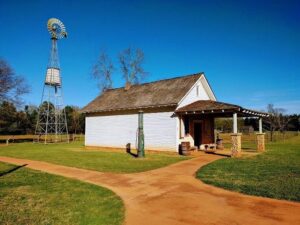
The Jimmy Carter National Historic Site in Plains, Ga., includes sites related to President Jimmy Carter. The site includes his boyhood farm, his former school and the town railroad depot, which served as his campaign headquarters during the 1976 election. Carter, the 39th President of the United States, was born in 1924 in Plains and still lives in the small town.
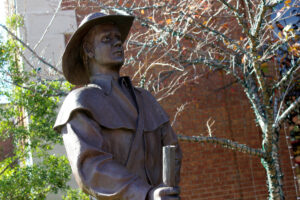
A statue honoring John Montgomery, the namesake of Montgomery County, was erected in 2002. While on a hunting expedition, Montgomery claimed Clarksville, Tennessee’s second oldest city. The city is named for Gen. George Rogers Clark.
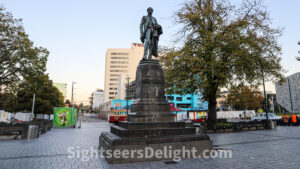
John Robert Godley was an Anglo-Irish statesman and bureaucrat. Godley is considered the founder of Canterbury, New Zealand, although he lived there for only two years. A bronze statue bearing his likeness was erected in Cathedral Square by the people of Christchurch in 1867. Artist Thomas Woolner designed the statue, which fell off its pedestal during a February 2011 earthquake.
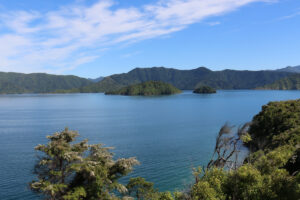
Surrounded by water and with cliffs dropping to the water, Karaka Point was the perfect location for a fortified pa (fort). The location provided the Māori an ideal location to monitor what is today known as Queen Charlotte Sound — first known as Totaranui — for potential invaders. The area was initially named Te Rae o Te Karaka after the Ngati Chief Te Karaka; he settled there during the early 1700s. Today, it offers a stunning vista of Queen Charlotte Sound, formed an estimated 280 million years ago. The park includes historic earthworks, and whare (house) pits that likely date to the early 1700s.