
Guidebooks are annoying. Just because some editor who doesn’t know me tells me which restaurant is the best or what attraction is a must-see doesn’t make it a must-see attraction. Sightseers’ Delight is dedicated to the weird, the quirky and the fun. After all, traveling is fun.
If it’s not, you’re doing it wrong.
All of the places highlighted in this ever-growing database are great. Sightseers’ Delight has visited them all. We think you should make a point to see every one of them. But, this is not a guidebook. Just a webpage to help you plan your next adventure.
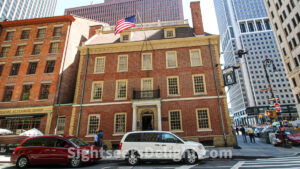
The historic Fraunces Tavern played a prominent role before, during and after the American Revolution. The edifice was a headquarters for George Washington, a venue for peace negotiations with the British and housed federal offices during the early days of the republic. Downstairs is a tavern, and a museum is located upstairs. Exhibits include a lock of hair and a tooth from George Washington.
10004
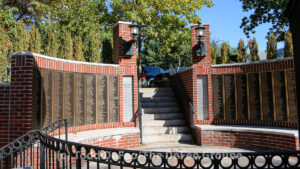
Freedom Plaza, located adjacent to the N.J. Transit Metuchen train station, is dedicated to those who lost their lives on Sept. 11, 2001. Its walls list the names of the more than 700 New Jersey residents, including 13 from Edison and Metuchen, who died in the terrorist attacks.
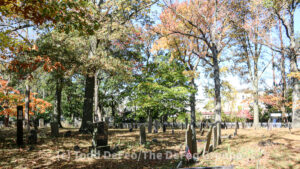
The Old Colonial Cemetery of Metuchen was founded during the first half of the 18th century, likely between 1715 and 1730. The grave of John Campbell, who died in 1731, is the oldest in the cemetery. Among those buried in the cemetery are 66 veterans of the American Revolution.
08840
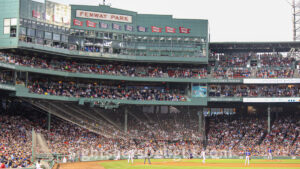
Fenway Park is a historic baseball stadium located in Boston, Massachusetts. It is the oldest ballpark in Major League Baseball and is known for its unique features, such as the Green Monster, a 37-foot tall left-field wall. Fenway Park opened in 1912 and has hosted countless iconic moments in baseball history.
02215
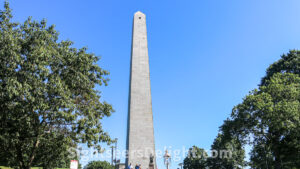
The Bunker Hill Monument was constructed to memorialize the June 17, 1775, Battle of Bunker Hill, one of the first major battles between British and Patriot forces during the American Revolution. The 221-foot-tall obelisk was erected between 1825 and 1843 in Charlestown, using granite from nearby Quincy. The Bunker Hill Museum, dedicated in June 2007, features exhibits about the battle.
02129
Copp’s Hill Burying Ground in the North End of Boston was established on Feb. 20, 1659, as North Burying Ground and is the second oldest cemetery in the city. The hill is named for William Copp, a shoemaker who once owned the land. Among those buried in the graveyard is Robert Newman, the patriot who placed the lanterns in the steeple of Old North Church for Paul Revere’s midnight ride.
02113
Old North Church is famous as the location where the message of “one if by land, two if by sea” was sent. In April 1775, Paul Revere told a trio of Boston patriots to hang two lanterns in the steeple to indicate British troops were approaching by sea. The church, built in December 1723, was inspired by the works of Christopher Wren, a British architect responsible for rebuilding London after the Great Fire.
02113
Faneuil Hall, a meeting hall and marketplace since 1743, is best known as the site of speeches by Samuel Adams and others. The historic building, often called “the Cradle of Liberty,” is part of Boston National Historical Park and a favorite stop on the Freedom Trail. Peter Faneuil, a wealthy merchant, slave trader and philanthropist built Faneuil Hall and donated the edifice to Boston.
02109
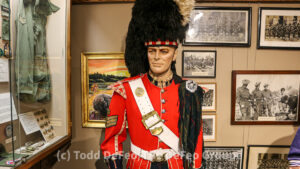
The storied history of the 48th Highlanders of Canada, a part-time militia, is on full display in this delightful museum in the basement of St. Andrew’s Church. The museum displays a range of photographs, artifacts and uniforms to bring the unit to life. The museum was founded in 1959 and has been located in St. Andrew’s Church since 1997. Former unit members staff the museum and are more than willing to share personal anecdotes, further enhancing the visitor experience.
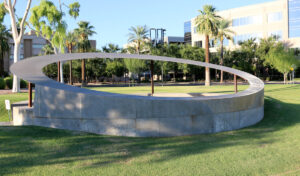
Located at the Wesley Bolin Memorial Plaza near the State Capitol in Phoenix, the 9/11 Memorial in Arizona was unveiled on Sept. 11, 2006. The memorial is often — and perhaps best — described as a circular plan with a flat inclined metal ring. The memorial opened to some controversy. The controversy centered on a number of quotes engraved into the ring, including “Congress Questions Why CIA and FBI Didn’t Prevent Attacks” and “You Don’t Win Battles of Terrorism With More Battles.”