
Guidebooks are annoying. Just because some editor who doesn’t know me tells me which restaurant is the best or what attraction is a must-see doesn’t make it a must-see attraction. Sightseers’ Delight is dedicated to the weird, the quirky and the fun. After all, traveling is fun.
If it’s not, you’re doing it wrong.
All of the places highlighted in this ever-growing database are great. Sightseers’ Delight has visited them all. We think you should make a point to see every one of them. But, this is not a guidebook. Just a webpage to help you plan your next adventure.
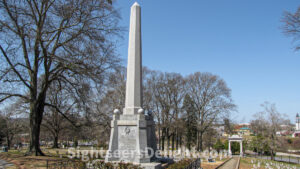
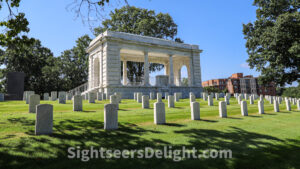
As the Civil War dragged on, wounded soldiers from the battles that ravaged North Georgia were taken to Marietta to be buried. That continued until Gen. William T. Sherman took control of the city on July 2, 1864. Following the war, Henry Greene Cole, a Marietta businessman and Unionist, offered land to build a cemetery for both Union and Confederate soldiers, but many city residents wouldn’t entertain the proposal of burying battlefield enemies in the same graveyard. So, in 1867, Jane Glover officially gave the land to a memorial association to create the cemetery for Confederate soldiers. Union troops who were killed throughout North Georgia were re-buried in the nearby Marietta National Cemetery. In addition to the more than 3,000 grave sites, the cemetery is home to a number of monuments, including a six-pound cannon that Union troops captured near Savannah. The cannon resided at the Georgia Military Institute for a number of years.
30064
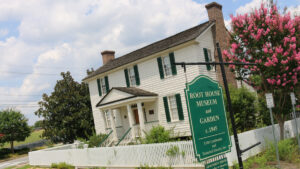
The William Root House Museum & Garden showcases what life was like for a middle-class Georgia family during the 1860s. Hannah and William Root built the simple frame house circa 1845. William Root an early merchant in Marietta, and the first druggist in town. The structure was more typical of houses in the south than the grand plantations and columned mansions.
30064
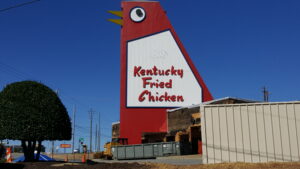
The Big Chicken, located along Cobb Parkway in southern Marietta, is a true Atlanta landmark. Motorists reference the 56-foot-tall big chicken when giving directions. Radio stations mention it when describing traffic. Airplane pilots even use it as a landmark for navigation. Today, the Big Chicken is a bit of an anomaly, something unique at a fast food restaurant. Cobb Parkway is a string of urban sprawl, one fast food joint after another. Originally built as more or less a marketing gimmick, the chicken has been embraced by locals and has remained a landmark for more than 45 years. After it was damaged by a storm in 1993, KFC debated whether to rebuild the Big Chicken. The community seemed to be in agreement: The Big Chicken was a local landmark, and it needed to remain; KFC shelled out $700,000 to rehabilitate the restaurant and return the giant bird to working order. Today’s incarnation of this local icon features a moving beak and rotating eyes.
30062
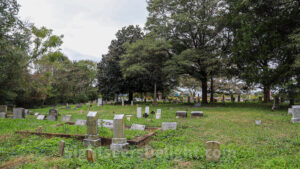
Maloney Springs Cemetery, located in the Fair Oaks community between Marietta and Smyrna, likely dates to the 1850s. It was previously connected to a church, usually identified as Maloney Springs Primitive Baptist Church. While the church apparently closed its doors in the 1960s, the burying ground, also known as Fair Oaks Cemetery, remained in use.
The cemetery is near Fair Oaks Elementary School. For directions, enter 407 Barber Rd, Marietta, GA 30060 as the address.
30060
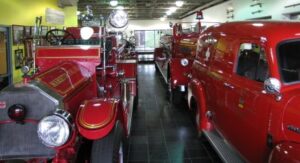
The story of fighting fires in Marietta, Ga., from bucket brigades to pumper and ladder trucks, is on display at the Marietta Fire Museum. One of the highlights of the museum is an 1879 horse-drawn Silsby steamer, which is nicknamed “Aurora.” The unit is said to be one of only five of its kind still in existence. The horse-drawn steamer remained in service until 1921 when it was replaced by an American LaFrance Pumper, also on display in the museum. The pumper is famous for being one of the first motorized fire vehicles in North Georgia. Also on display are a 1929 Seagrave pumper, a 1949 Pirsch ladder truck and a 1952 Chevrolet panel truck. In addition to the fire vehicles, a number of antique helmets, firefighting accessories and a “Wall of Flame” featuring photos of some of the city’s larger fires from over the years are on display.
30060
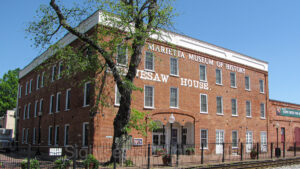
The Marietta Museum of History is housed in a former cotton warehouse and hotel. It is one of the oldest buildings in Marietta and was where the members of the Andrews Raid before stealing a locomotive in Kennesaw, Ga., on April 12, 1862. The museum offers a series of exhibits dedicated to the city’s history and features memorabilia, including photographs and artifacts.
30060
30060
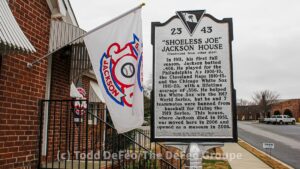
The Shoeless Joe Jackson Museum and Baseball Library is an independent, non-profit organization honoring “Shoeless” Joe Jackson’s career and legacy. The research, collection, and display of original artifacts, photos, and countless books provide context for Jackson’s career. In addition to dispelling myths and educating the public about Jackson’s life and career, its mission is to be an active, contributing member of the local community, continuing to grow the game of baseball.
29601
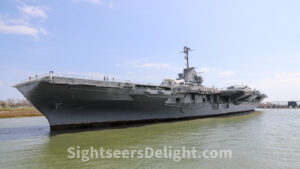
The USS Yorktown, an Essex-class aircraft carrier, is a National Historic Landmark moored in Charleston harbor. The vessel was commissioned in 1943, and in the 1950s, it was converted under the SCB-27A program as an attack aircraft carrier, CVA-10. An angled deck was added in 1955. The USS Yorktown was decommissioned in 1970 and donated to the Patriots Point Development Authority in 1975. It was relocated to Charleston and has remained the centerpiece of Patriots Point Naval & Maritime Museum. In the U.S. Navy donation contract, South Carolina indicated the state planned to preserve and exhibit the vessel.
29464
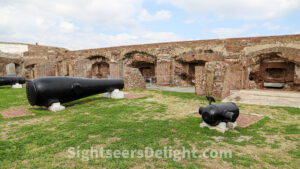
Fort Sumter is a sea fort built on an artificial island near Charleston, South Carolina to defend the region from a naval invasion. It was built after British forces captured and occupied Washington during the War of 1812 via a naval attack.
29412