
Guidebooks are annoying. Just because some editor who doesn’t know me tells me which restaurant is the best or what attraction is a must-see doesn’t make it a must-see attraction. Sightseers’ Delight is dedicated to the weird, the quirky and the fun. After all, traveling is fun.
If it’s not, you’re doing it wrong.
All of the places highlighted in this ever-growing database are great. Sightseers’ Delight has visited them all. We think you should make a point to see every one of them. But, this is not a guidebook. Just a webpage to help you plan your next adventure.

The nonprofit Neon Museum is dedicated to collecting, preserving, studying and exhibiting iconic Las Vegas signs. The museum, founded in 1996, is home to dozens of signs that once stood outside of casinos in the city.
89101
The 10-acre Hemenway Park features standard park fare: playground equipment, tennis and basketball courts and gazebos for parties. But, the real attraction here is the Bighorn sheep that descend from the nearby mountains to water, graze and rest. Located in Hemenway Valley on Ville Drive, the park also offers fantastic views of Lake Mead and is the perfect pull off between Las Vegas and the Hoover Dam.
89005
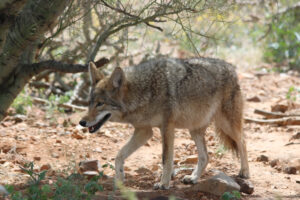
The Sonoran Desert is much more than cactuses and coyotes, and the 98-acre Arizona-Sonora Desert Museum shows that. The one-of-a-kind museum features a zoo, botanical garden, art gallery, natural history museum and aquarium. It is home to more than 230 species of animals and 1,200 varieties of plants. The museum, founded in 1952, interprets the natural history of the Sonoran Desert and nearby ecosystems. There are two miles of walking paths that cover 21 acres. The real highlight is the live animal demonstrations, where visitors can witness birds of prey in their element.
85743
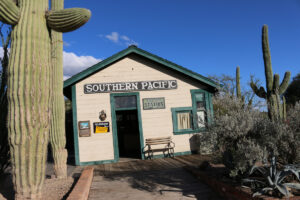
Old Tucson is half movie studio and half theme park that features live entertainment, including action stunt shows and musicals. Columbia Pictures built the studio on land Pima County owned, in 1938 to serve as a replica of 1860s Tucson for the movie Arizona. Over the years, dozens of producers have turned to Old Tucson to film at the studio, including 1993’s Tombstone. Today, guests can walk the studio’s streets, ride on a miniature train, watch shows and see how stuntmen film gunfights for movies. Old Tucson is near the western portion of Saguaro National Park.
85735

The Saguaro cactus is perhaps the most endearing symbol of the Sonoran Desert and the American southwest. Among the best places to see these marvels of nature up close is the 92,000-acre Saguaro National Park. There are two sections of the park: east (the Rincon Mountain District) and west (the Tucson Mountain District). President Herbert Hoover in 1933 used the Antiquities Act to establish the Saguaro National Monument, and President John. F. Kennedy added the Tucson Mountain District in 1961. In 1994, Congress combined the two districts to form the national park. Today, in addition to the stunning views, there are 165 miles of trails for visitors to explore.
85730
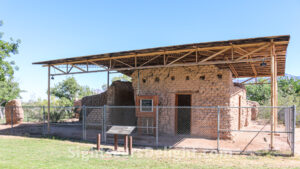
Fort Lowell Park is home to the extant remains of the former Fort Lowell military post. The United States Army established the Post of Tucson in May 1862; they abandoned it in July 1864 but re-established it a year later. In August 1866, the Army named the installation renamed Camp Lowell in honor of Gen. Charles Russell Lowell. In March 1873, the Army moved the post to its current location, then located on the outskirts of Tucson, and renamed it Fort Lowell in April 1879. The Amry used this location from 1873 until 1891. The park is home to several of the post’s fortmer adobe structures and a museum.
85712

Horticulturist and collector Harrison G. Yocum started the Tucson Botanical Gardens in his home in 1964. After moving to Randolph Park, the gardens moved to their current location, at the historic Porter Family property, in 1974. The five-and-a-half-acre Tucson Botanical Gardens is home to a range of plants native to the local region, including cacti and arid plants. Its Butterfly & Orchid Pavilion, open from October to May, features a display of live tropical butterflies from five continents. The garden also showcases orchids, bromeliads and jungle vegetation.
85712
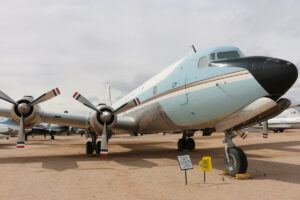
The Pima Air & Space Museum is one of the world’s largest aerospace museums. The museum, established in 1976, is home to roughly 300 aircraft and more than 125,000 artifacts displayed outdoors and in five hangars across more than 80 acres. Its collection includes an SR-71A Blackbird, an A-10 Warthog, a Boeing B-29 Superfortress and President Kennedy’s Air Force One. The museum, situated adjacent to Davis-Monthan Air Force Base, is the country’s third largest aviation museum and the largest privately funded aviation and aerospace museum in the world. The museum is also home to the Arizona Aviation Hall of Fame.
85706
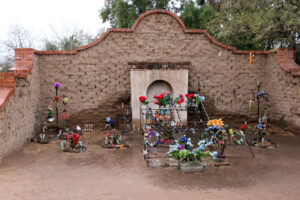
El Tiradito is a famous shrine in the Old Barrio section of Tucson. The memorial is said to be the only Catholic shrine in the country “dedicated to a sinner buried in unconsecrated ground.” According to one version of the legend, the monument honors Juan Oliveras, an 18-year-old ranch hand who had an affair with his mother-in-law. His father-in-law subsequently killed Oliveras. The original shrine dates to 1870, but the current version dates to 1920s. The shrine is said to exemplify Sonoran Catholicism, a blending of Catholic doctrine with local customs. The National Register of Historic Places added it to its list in 1971.
85701
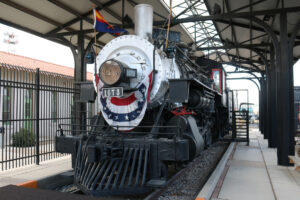
The Southern Arizona Transportation Museum preserves and interprets the history of railroads in southern Arizona. The one-time records vault building at the former Southern Pacific depot houses the museum. The city of Tucson purchased the building in 1998 and renovated it in 2004 to restore it to its 1941 style. Tucson Mayor Bob Walkup helped dedicate the museum on March 20, 2005, the 125th anniversary of the arrival of the railroad in Tucson. The centerpiece of this museum is Southern Pacific locomotive No. 1673. Schenectady Locomotive Works built the steamer in 1900, and it starred in the movie Oklahoma in 1955.
85701