
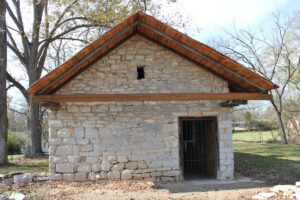
A stone cabin on this site is said to be stone blockhouse of the Valentine Sevier Station. On Nov. 11, 1794, Native Americans attacked the outpost, killing six; a seventh was scalped, but recovered. Valentine Sevier was a brother of Tennessee’s first governor, John Sevier.
37042
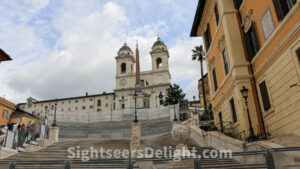
The Spanish Steps or Scalinata di Trinità dei Monti in Italian links Piazza di Spagna and Piazza Trinità dei Monti, which is home to the church of the Santissima Trinità dei Monti or Trinità dei Monti. Francesco de Sanctis designed the staircase, which was completed in 1725.

By the 1930s, when Frank Lloyd Wright and the Taliesin Fellowship began trekking west for the winter, Wright was an established architect. Taliesin West served as the winter home and school for Wright from 1937 until his death in 1959 at the age of 91. The complex drew its name from Taliesin, in Spring Green, Wisc., which served as a summer home for Wright.
85259

The Tennessee State Capitol, home of the Tennessee legislature and the governor’s office, is a National Historic Landmark. Designed by architect William Strickland, it is one of Nashville’s most prominent examples of Greek Revival architecture. It is one of only twelve state capitols (along with those of Alaska, Delaware, Florida, Hawaii, Louisiana, Nebraska, New Mexico, New York, North Dakota, Ohio, and Virginia) that does not have a dome.
The Texas Capitol in Downtown Austin is perhaps the most recognizable state capitol building in the country. The Italian Renaissance Revival-style building stands 302.64 feet tall, making it the sixth tallest state capitol and taller than the United States Capitol in Washington. Workers laid the building’s cornerstone on March 2, 1885, Texas Independence Day. The capitol’s exterior walls are faced with red granite, which was quarried from near Burnet, Texas. Detroit architect Elijah E. Myers designed the edifice, which was completed in 1888. The building’s grounds are home to several monuments, including the Volunteer Firemen Monument and the Heroes of the Alamo Monument.
78701

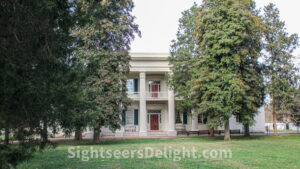
Andrew Jackson built the original Hermitage in 1804, more than a decade before the Battle of New Orleans during the War of 1812 and more than 20 years before he was elected the nation’s seventh president. The current mansion was built between 1819 and 1821 and later underwent major renovations in 1831 and after an 1834 fire heavily damaged much of the house. The current Greek revival look of the house dates to 1835. Jackson — nicknamed “Old Hickory” — retired from public life in 1837, and he lived in The Hermitage until his death in 1845. Jackson and his wife, Rachel, who preceded him in death, are buried on the grounds.
37076
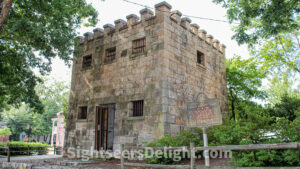
The Old Rock Gaol in downtown Greensboro was built about 1807 after the Superior Court of Greene County recommended a substantial jail be built. The jail, patterned after European bastilles, was built with using granite from a local quarry. With walls that are two feet thick, the jail has the distinction of being the oldest standing masonry jail in Georgia. The jail was used until 1895. Open by appointment, visitors can see where executions by hanging took place. Hangings were legal in Georgia from 1735 to 1924.

The Pace House in Vinings, Georgia, dates to after the Civil War. Before the war, Hardy Pace, operator of Pace’s Ferry, built his home in what was then called Vining’s Station. Federal troops, pursuing Confederate forces as they abandoned Smyrna, occupied Vining’s Station from July 5-17, 1864. Union Gen. William T. Sherman used Pace’s house as his headquarters and planned the siege of Atlanta. After federal troops left Vinings, the house served as a hospital for wounded soldiers during the Atlanta fighting, but because it was infected with disease, it was burned to the ground. Following the Civil War, Solomon Pace, Hardy Pace’s son, returned to find the homestead in ruins. Sometime between 1865 and 1874, he built a new home here, using whatever could be salvaged.
30339
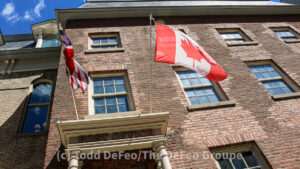
The First Toronto Post Office is the only surviving example of a post office that served as a department of the British Royal Mail in Canada. The Georgian style building dates to 1833 before York became the city of Toronto and is also sometimes referred to as the Fourth York Post Office. Today, the museum, which is also home to the Town of York Historical Society, includes a range of exhibits about the history of mail in Canada and the building itself.