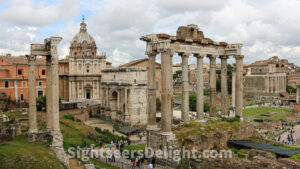
The Foro Romano or Roman Forum was formerly the center of day-to-day life in Rome. Surrounded by government buildings, residents referred to the area as Forum Magnum or the Forum. It also served as a venue for public speeches, criminal trials and gladiator matches.
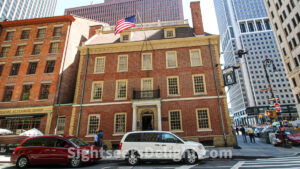
The historic Fraunces Tavern played a prominent role before, during and after the American Revolution. The edifice was a headquarters for George Washington, a venue for peace negotiations with the British and housed federal offices during the early days of the republic. Downstairs is a tavern, and a museum is located upstairs. Exhibits include a lock of hair and a tooth from George Washington.
10004
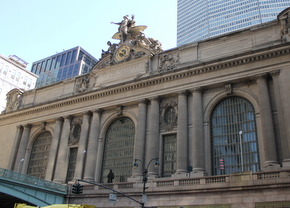
There are some places that are truly unparalleled, whether it’s the atmosphere, the history or the general experience. While New York City as a whole falls into that category, Grand Central Terminal does as well. The New York Central built the grand terminal, which opened in 1913. An estimated 21.6 million people visit the terminal annually, making it the sixth most visited tourist attraction in the world, according to Travel + Leisure magazine. Even if travel plans in New York don’t call for an entry into or departure from Grand Central, a visit to the Terminal is well worth the sidetrack, no matter how far out of the way it might be.
10017

The Grapevine Calaboose, which derived its name from “calabozo,” the Spanish word for dungeon, was built as the town’s first jail in 1914. The Grapevine City Council authorized its construction in 1909. It was originally located elsewhere in town (on Barton Street) and moved to Heritage Park in 1976, and to its current location in 1994. The jail apparently housed associates of the Barrow Gang. It remained in use until the early 1950s.
76051
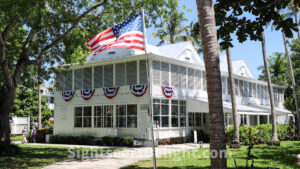
The Harry S. Truman Little White House in Key West, Florida, is a historic building that served as the winter White House of President Harry S. Truman during his presidency. Originally built in 1890 as the naval station’s command headquarters during the Spanish-American War, it was later used as a vacation home by several presidents before Truman. The house is now a museum that is open to the public for tours, which offer visitors a glimpse into the life of Truman and other presidents who stayed at the house. The museum features exhibits, artifacts, and photographs that highlight the history of the house and its famous occupants.
This post incorporates text generated with GPT-3, OpenAI’s large-scale language-generation model.
33040
Hearst named his mansion La Cuesta Enchantada (or The Enchanted Hill), but it is commonly referred to as Hearst Castle. The Casa Grande that stands atop the hillside, the symbol of the mansion, features two towers were inspired by the Cathedral of Santa Maria la Mayor in Ronda, Spain. The Castle is filled with Hearst’s collection of treasures from around the world, ranging from medieval tapestries to Renaissance furniture to 19th century sculptures. But, perhaps the most intriguing element of the mansion is Neptune Pool , which features the façade of an ancient Roman temple as its centerpiece.
93452
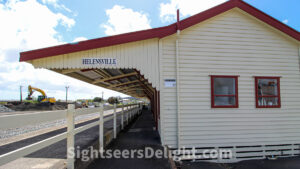
The rail line between Riverhead and Helensville opened in 1875. The Helensville Railway Station opened in July 1881. It closed in 1987, though it reopened temporarily in 2008 and 2009.
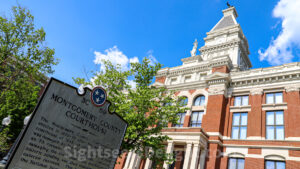
The historic Montgomery County Courthouse in downtown Clarksville, Tennessee, dates to after the city’s great fire of 1878. Depending on the source, it is either the county’s fourth or sixth courthouse. It was built in 1878-79 to replace an edifice destroyed in the fire, which destroyed much of the city. The “new” courthouse was damaged several times, including during a 1900 fire and a 1999 tornado. Following the tornado, court operations moved to a temporary location on Legion Street (now Strawberry Alley) before moving into its current location. Today, the historic courthouse houses county government offices.