

Guidebooks are annoying. Just because some editor who doesn’t know me tells me which restaurant is the best or what attraction is a must-see doesn’t make it a must-see attraction. Sightseers’ Delight is dedicated to the weird, the quirky and the fun. After all, traveling is fun.
If it’s not, you’re doing it wrong.
All of the places highlighted in this ever-growing database are great. Sightseers’ Delight has visited them all. We think you should make a point to see every one of them. But, this is not a guidebook. Just a webpage to help you plan your next adventure.
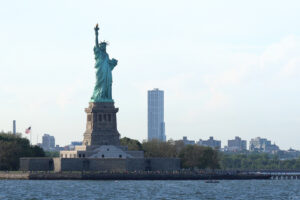
There is no more well-known symbol of New York City or the country, for that matter than Lady Liberty herself. French sculptor Frédéric Auguste Bartholdi designed colossal neoclassical sculpture, while Gustave Eiffel oversaw its construction. The Statue of Liberty, which sits on Liberty Island in New York Harbor, was dedicated on Oct. 28, 1886. For anyone who doesn’t want to take the boat to the island should consider the Staten Island Ferry for great views. It won’t cost a dime.
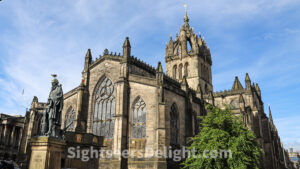
St. Giles’ Cathedral in Edinburgh, Scotland, has stood at the heart of the city for more than 900 years and remains one of the country’s most important historic churches. Founded in 1124 by King David I, it occupies a prominent site on the High Street in the Old Town along the Royal Mile, placing it at the center of both Edinburgh’s physical landscape and much of Scotland’s religious history.
The church is especially closely tied to the Scottish Reformation and to John Knox, who served as minister there after Protestant reformers took control of Edinburgh in 1559. St. Giles’ was at the center of the religious upheaval that reshaped Scotland, and its history reflects the country’s wider struggles between Catholic and Protestant forces during the 16th century. Later, in 1633, Charles I made it the cathedral of the newly created Diocese of Edinburgh.
The present building dates largely from the 14th through early 16th centuries, with major changes in the 19th and 20th centuries, including the addition of the Thistle Chapel. Today, St. Giles’ remains a working church administered by the Church of Scotland and is one of Edinburgh’s best-known historic landmarks.
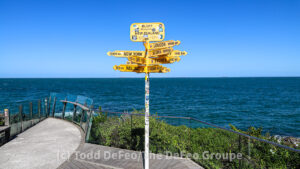
Stirling Point feels like the end of the Earth. In reality, it is the southern end of State Highway 1 that runs the length of New Zealand.
The St John the Baptist Church in Cardiff, Wales, is a parish church listed as a Grade I building. It is the only church in the city center that dates back to pre-Medieval times and is also the only medieval building apart from Cardiff Castle. The church was constructed in 1180 as a chapel to serve as a smaller place of worship for St Mary’s Church. St Mary’s Church was established by Benedictine monks from Tewkesbury Abbey.
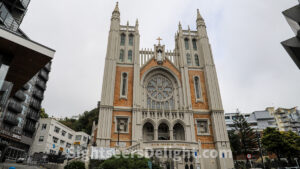
St. Mary of the Angels sits on the site of Wellington’s first Catholic Church, established in 1843, and is the third church to occupy the site. The church opened on March 26, 1922, replacing a building that burned in May 1918. Construction started in April 1919, and the church’s contractor, H.E. Manning, went bankrupt during construction. Father Stanislaw Mahoney, the parish priest, and a close friend, Martin Maloney, worked with a group of largely unskilled workers to complete the church.
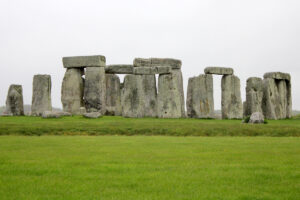
Nearly a million people visit Stonehenge, a Neolithic monument, every year. The mysterious and alluring Stonehenge sits eight miles north of Salisbury and is one of England’s most recognizable symbols, even if many scholars and experts disagree on its original purpose. What makes Stonehenge so fascinating is that despite centuries of study and exploration, no one can say with 100 percent certainty the history of Stonehenge.
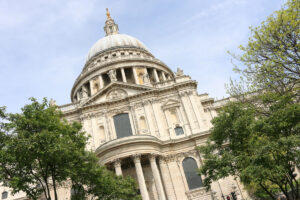
St Paul’s Cathedral, the mother church of the Diocese of London, is the seat of the Bishop of London. The original church was consecrated in 1300; the current church was consecrated in 1697. The 365-foot-tall edifice was the tallest building in London from 1710 to 1967, and its dome is among the highest in the world. It is the second-largest church building in area in the United Kingdom. Over the years, St Paul’s Cathedral has hosted several high-profile events, including the 1981 wedding of Prince Charles and Lady Diana Spencer and jubilee celebrations for Queen Victoria.
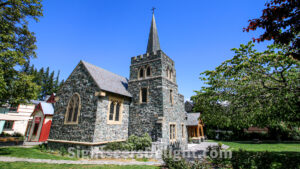
St. Peter’s was designed by an architect from Dunedin using Gothic details, but built along the lines of an English parish church. Anglican roots in Queenstown, however, date to at least 1861. An earlier church was built in 1863 and modified over the years. The oft-photographed stone church, which almost seems out of place in adreneline-driven modern Queenstown, seats 130 people.