
Guidebooks are annoying. Just because some editor who doesn’t know me tells me which restaurant is the best or what attraction is a must-see doesn’t make it a must-see attraction. Sightseers’ Delight is dedicated to the weird, the quirky and the fun. After all, traveling is fun.
If it’s not, you’re doing it wrong.
All of the places highlighted in this ever-growing database are great. Sightseers’ Delight has visited them all. We think you should make a point to see every one of them. But, this is not a guidebook. Just a webpage to help you plan your next adventure.
Dominican friars founded Officina Profumo-Farmaceutica di Santa Maria Novella in 1221, making it one of the oldest pharmacies in the world. It is part-museum, part-store selling traditional perfumes and elixirs. The Farmaceutica has been open to the public since 1612.
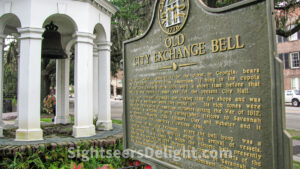
This bell from the former City Exchange dates to 1802 and may be the oldest in Georgia. The bell, imported from Amsterdam, hung in the cupola of the City Exchange from 1804 until the building was razed to make way for the new Savannah City Hall built in 1905. In addition to signalling the closing time for shops, a watchman would also ring the bell in event of a fire and to welcome distinguished visitors to the city. Today, it hands in a replica of the City Exchange, which was erected in 1957.
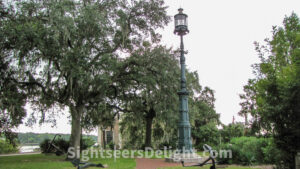
Erected in 1858 by the U.S. Lighthouse Board, this cast-iron “street-lamp”–style beacon served as the rear range light (paired with a front light on Fig Island) to guide ships safely into Savannah Harbor and past six British vessels scuttled in 1779. The 25-foot tower (focal plane roughly 77 feet above the river) was shifted a few feet south in 1869, refurbished in 1929, and extinguished during World War II. By 1958, corrosion had necessitated the use of guy cables for stabilization. A major restoration funded with $125,000 from the Savannah Morning News and CSX dismantled, treated, repaired, and repainted the structure; it was re-erected and relit on January 11, 2001. Now within the Savannah Historic District, the beacon—originally a red light—glows today with a decorative gas lamp.
The old Rockdale County Jail was built in 1897 and was remained in use until 1969. Its exterior walls are three bricks thick, while interior walls are two bricks thick. The floor and ceiling of the second floor are constructed of steel with six inches of concrete above it. The main floor consisted of an office for sheriff and living quarters for his family. Five Rockdale County sheriffs and their families lived in the building between 1897 and 1969. The Rockdale County Historical Society acquired the property in 1975.
Old Sarum is an abandoned hill fort dating that was likely established in 400 BC. The Romans later used the site and created the town of Sorviodunum. A trio of Roman roads converged near the site, making it an essential strategic location. Following the Norman conquest of England in 1066, the city was expanded, but it was largely abandoned in the 13th century. The bishop of Salisbury, Osmund de Sees, completed a small cathedral at the site in 1092. Little is left of the city, as much of the original construction in Old Sarum was demolished after Henry VIII sold the rights to the castle’s remains in 1514.
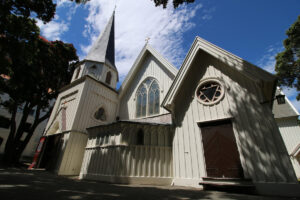
Old St Paul’s was built in 1865-66 and constructed from New Zealand native timbers. Rev. Frederick Thatcher designed the Gothic Revival structure, which served as the Diocese of Wellington of the Anglican Church between 1866 and 1964. The building was nearly demolished in the 1960s. However, a civic organization formed to save the structure from demolition.
The Old Town Fernandina Historic Site is the original location of the city of Fernandina Beach. The village was laid out north of the modern-day town on a low bluff overlooking the Amelia River in 1811 and expanded in 1821. The settlement was near Fort San Carlos, which was erected in 1816 and abandoned about 1821. When the railroad built to the area in the 1850s, it was unable to construct to the site of Old Town Fernandina and instead terminated at present-day Fernandina Beach. In 1853, the city relocated to its present-day location. Some buildings stand in the Old Town section, but none date to the original settlement.
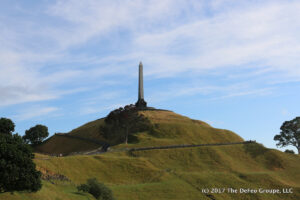
One Tree Hill is a 597-foot-tall volcanic peak in Auckland, which provides stunning views of the area around the city. The area is an important landmark for the native Māori. Sir John Logan Campbell, a native of Scotland known as “the father of Auckland,” is buried on the summit of One Tree Hill. Presuming the Māori would die out, Campbell gave money for a memorial to the Māori atop One Tree Hill. The Māori name of One Tree Hill is Maungakiekie, which means “mountain of the kiekie vine.”
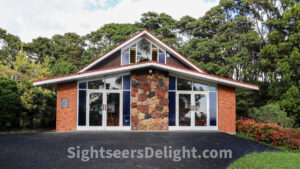
Oratia Combined Church dates to 1872 and opened initially on land Queen Victoria granted to Waikumete Parish settlers. The current church opened in 1968.