
Guidebooks are annoying. Just because some editor who doesn’t know me tells me which restaurant is the best or what attraction is a must-see doesn’t make it a must-see attraction. Sightseers’ Delight is dedicated to the weird, the quirky and the fun. After all, traveling is fun.
If it’s not, you’re doing it wrong.
All of the places highlighted in this ever-growing database are great. Sightseers’ Delight has visited them all. We think you should make a point to see every one of them. But, this is not a guidebook. Just a webpage to help you plan your next adventure.

Mount Rushmore National Memorial, located about 30 minutes southwest of Rapid City, features portraits of four presidents carved into granite — George Washington, Thomas Jefferson, Abraham Lincoln and Theodore Roosevelt. Measuring 60-feet-tall, the portraits are perhaps the definitive American attraction. Crews completed Mount Rushmore between Oct. 4, 1927, and Oct. 31, 1941. Sculptor Gutzon Borglum selected the four presidents to memorialize on Mount Rushmore. More than two million people visit Mount Rushmore, sometimes called the “Shrine of Democracy.”
Recent news releases from Mount Rushmore National Memorial:
- National Park Service Announces Return of Independence Day Fireworks to Mount Rushmore National Memorial
- National Park Service Plans Prescribed Fire at Mount Rushmore National Memorial - Starling Basin
- Mount Rushmore National Memorial Offers Summer Programming
- Mount Rushmore National Memorial to Unveil New Visitor Center Movie and Theater Remodel on May 23, 2025
- New Outdoor Ethnobotanical Garden Expands Interpretive Storytelling at the Memorial
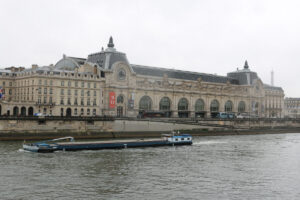
Anywhere in the world, the Musée d’Orsay would be the best art museum in the city. In Paris, it is probably the second best art museum in town. Regardless, the Musée d’Orsay is one of the best art museums in the world. It is home to one of the largest collections of impressionist and post-impressionist masterpieces. Manet, Monet, Degas, Renoir, Gauguin and Van Gogh are among the artists prominently featured in the museum. The museum opened in 1986 in the former Gare d’Orsay railway station, built in 1900.
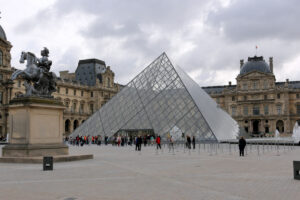
The Louvre is perhaps the world’s best art museum. It and houses some of the most famous and consequential works of art ever created, including Leonardo da Vinci’s Mona Lisa. A former royal palace, the Louvre is located between the Tuileries Gardens and the church of Saint-Germain l’Auxerrois and is situated on the Right Bank of the Seine River. Construction on the earliest incarnation of the building, the Louvre Castle started in 1202 while construction on the Louvre Palace dates to 1546.
Museo Correr began when Teodoro Correr, a member of a traditional Venetian family, bequeathed his collection to the city of Venice. Correr collected works of art and objects that reflect the history of Venice. The items were housed initially in the Correr family’s Grand Canal palace, which first opened to the public in 1836. In 1922, the collection moved to its current location on St. Mark’s Square, where it occupies the Napoleonic Wing and a portion of the Procuratie Nuove.
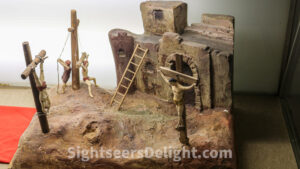
Anyone wanting a unique look at the past should look no further than the Museo Criminologico or Crime Museum. Educational and informative, this small museum is also home to some real oddities, such as the Milazzo Cage. This horrible body-shaped iron cage that still contains the remains of its last inhabitant. Kids will assuredly love it.
The Museo dell’Opera del Duomo (or the Museum of the Works of the Cathedral in English) is home to many of the original works of art created for Florence’s famed Cattedrale di Santa Maria del Fiore (better known as the Duomo). The museum, which has been called “one of the world’s most important collections of sculpture,” opened in 1891. Its collection includes Lorenzo Ghiberti’s doors for the Baptistery of Florence Cathedral (called the Gates of Paradise) and The Deposition, a pietà Michelangelo sculpted and intended for his tomb.
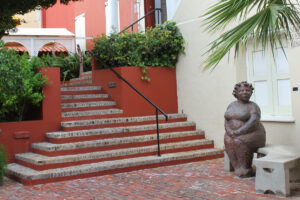
Slavery is a major part of Curacao’s history, and the Kura Hulanda Museum takes an in-depth look at how the institution shaped the island’s history.
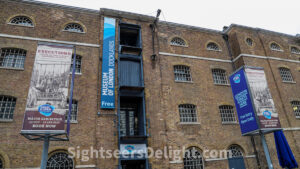
The Museum of London Docklands in West India Quay tells the ever-changing story of London from 450,000 BC to the present day. The galleries, exhibitions, displays, and activities aim to ignite enthusiasm for London and showcase the city’s vibrant and distinctive character. The museum explains the River Thames’ history, the Port of London’s growth, and the docks’ historical link to the Atlantic slave trade. It opened in 2003 and is housed in a Grade I listed early-19th century Georgian “low” sugar warehouse built in 1802 on the north side of West India Docks, just a short walk from Canary Wharf.

The National Archaeological Museum of Naples is home to an extensive collection of Greek and Roman artifacts. The museum houses Roman artifacts from nearby Pompeii, Stabiae and Herculaneum.