

Guidebooks are annoying. Just because some editor who doesn’t know me tells me which restaurant is the best or what attraction is a must-see doesn’t make it a must-see attraction. Sightseers’ Delight is dedicated to the weird, the quirky and the fun. After all, traveling is fun.
If it’s not, you’re doing it wrong.
All of the places highlighted in this ever-growing database are great. Sightseers’ Delight has visited them all. We think you should make a point to see every one of them. But, this is not a guidebook. Just a webpage to help you plan your next adventure.

The Grounds of Remembrance in Historic Dublin, Ohio, honors those who served the country in war and peace. The park spans approximately one acre and is adjacent to passive parkland, the Dublin Public Library, the Indian Run Cemetery, and Dublin Road. The Grounds of Remembrance includes the Recognition Walk, which features 500 dedication stones to honor veterans.

The Guinness Storehouse in Dublin offers visitors an immersive look at the history, heart, and craft behind one of Ireland’s most famous beers. Located inside the original brewery at St. James’s Gate, the Guinness Storehouse includes seven floors of exhibits in a building that once served as the brewery’s fermentation plant. Along the way, visitors learn about the ingredients, heritage, and culture that shaped Guinness into a global icon. The experience concludes at the Gravity Bar, where panoramic 360-degree views of Dublin provide one of the city’s highest and most scenic vantage points.
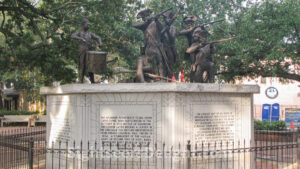
This dramatic bronze by sculptor James Mastin honors the Les Chasseurs-Volontaires de Saint-Domingue, the largest unit of men of African descent to fight for American independence, who took part in the 1779 Siege of Savannah. The figures include a drummer boy representing 12-year-old Henri Christophe, who would later lead Haiti and become its king. The regiment’s soldiers were free men recruited in present-day Haiti; unlike most Black combatants in the war, who joined the British after being promised freedom, these volunteers fought for the American cause. Set in Franklin Square, steps from City Market, the monument pays tribute to their courage and to Haiti’s enduring ties with Savannah. Interpretive panels provide visitors with context on the siege and the unit’s role in Savannah’s Revolutionary history today.
Hale Pa‘ahao, or stuck-in-irons house, was built in the 1850s as the “new” prison in the port town of Lahaina. The jail saw increasing use during the peak of the whaling era, a time when Lahaina was an important destination.

The Hato Caves were once located beneath the sea, but as the ocean levels lowered, they emerged from beneath the waves. The caves, made of marine coral limestone, are located on the northern coast of Curaçao. Caiquetio Indians are the first humans to inhabit the area, but they apparently did not venture too far inside the caves. Later, they served as a popular hiding spot for runaway slaves. Interestingly, the caves are hot caves, and the tempature inside is not cooler like many caves.

The rail line between Riverhead and Helensville opened in 1875. The Helensville Railway Station opened in July 1881. It closed in 1987, though it reopened temporarily in 2008 and 2009.
Built after World War II, the museum is dedicated to the atomic bombing of the city and to the war. Though the museum presents history from a Japanese perspective, it includes exhibits and information detailing Japanese aggression throughout Asia leading up to World War II. The museum also includes copies of letters the city’s mayors have written to leaders of various countries, opposing their successful tests of an atomic weapon. The mayors are advocates for an atomic bomb-free world.
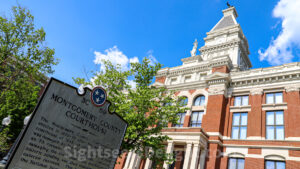
The historic Montgomery County Courthouse in downtown Clarksville, Tennessee, dates to after the city’s great fire of 1878. Depending on the source, it is either the county’s fourth or sixth courthouse. It was built in 1878-79 to replace an edifice destroyed in the fire, which destroyed much of the city. The “new” courthouse was damaged several times, including during a 1900 fire and a 1999 tornado. Following the tornado, court operations moved to a temporary location on Legion Street (now Strawberry Alley) before moving into its current location. Today, the historic courthouse houses county government offices.