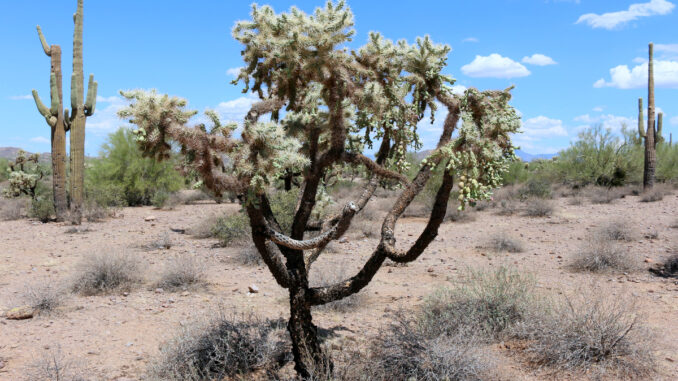
Lost Dutchman State Park in Apache Junction, Ariz. (Photo by Todd DeFeo/The DeFeo Groupe)
Guidebooks are annoying. Just because some editor who doesn’t know me tells me which restaurant is the best or what attraction is a must-see doesn’t make it a must-see attraction. Sightseers’ Delight is dedicated to the weird, the quirky and the fun. After all, traveling is fun.
If it’s not, you’re doing it wrong.
All of the places highlighted in this ever-growing database are great. Sightseers’ Delight has visited them all. We think you should make a point to see every one of them. But, this is not a guidebook. Just a webpage to help you plan your next adventure.
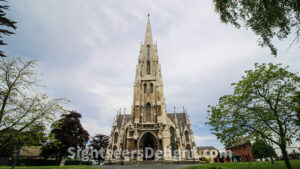
First Church is a prominent church in Dunedin and the city’s primary Presbyterian church. The current church, considered to be decorated Gothic style, stands on the stump of Bell Hill, a significant promontory that initially divided the heart of Dunedin in half. Dr. Thomas Burns, the brother of Scottish poet Robert Burns, laid the foundation stone in 1868, but the church was not completed until 1873.
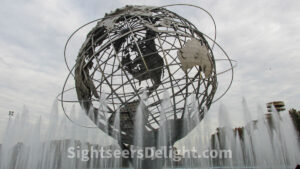
Flushing Meadows–Corona Park is the largest park in Queens and the fourth-largest public park in New York City. The 897-acre park was created for the 1939-40 New York World’s Fair, and it later hosted the 1964-65 New York World’s Fair. The park is perhaps best know for the New York State Pavilion and the Unisphere, the giant spherical stainless steel representation of the Earth.
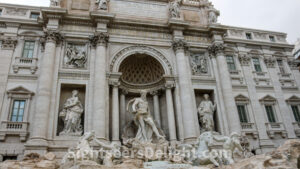
Nicola Salvi in 1732 won a competition to design a new fountain in the Trevi district of Rome. Giuseppe Pannini completed the fountain in 1762. Legend says anyone who tosses a coin into the fountain’s waters will return to Rome. The fountain, featured in countless movies, was built on the site of an earlier fountain.
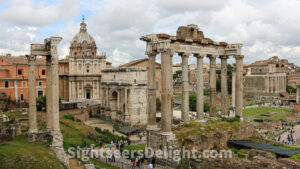
The Foro Romano or Roman Forum was formerly the center of day-to-day life in Rome. Surrounded by government buildings, residents referred to the area as Forum Magnum or the Forum. It also served as a venue for public speeches, criminal trials and gladiator matches.
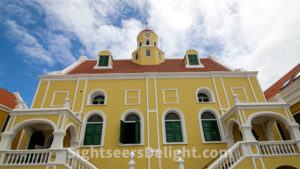
Dating to 1769, Fort Church is the oldest church on the island. The church’s associated museum features a number of historic artifacts chronicling the Dutch Protestant congregation that dates to 1635.
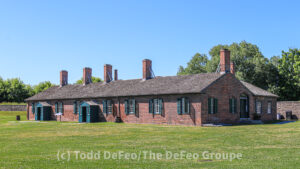
British Army and Canadian militia troops built Fort York during the late 18th and early 19th centuries. Their goal was to defend what was then the settlement of York from a potential military attack from their southern neighbors. Despite the military presence, we attacked in 1813 and burned part of York, including the Parliament Building. The British retaliated the following year and burned the White House. It was designated a National Historic Site in 1923, and Toronto designated it a Heritage Conservation District in 1985.
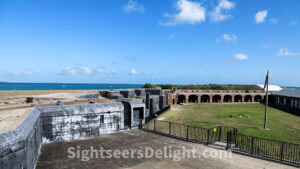
Fort Zachary Taylor Historic State Park, located near the southern tip of Key West, Florida. It was placed on the National Register of Historic Places in 1971 and designated a National Historic Landmark in 1973. Construction of the fort began in 1845. The fort was built as part of a mid-19th century plan to defend the southeast coast following the War of 1812. Though it has been modified over the years, Fort Zachary Taylor was used during the 1898 Spanish–American War, World War I, World War II and the Cuban Missile Crisis.
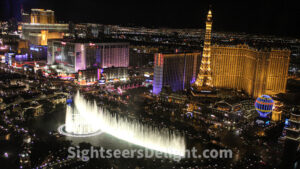
In many ways, the Fountains of Bellagio are as recognizable as the Las Vegas Strip itself. The choreographed fountains give spectators a one-of-a-kind show, dancing to a range of music, such as Luciano Pavarotti and Frank Sinatra. There is no charge to view the fountains, which are located within an eight-acre manmade lake.
The Freedom Crossing Monument on the Niagara River in Lewiston, New York. Dedicated on Oct. 14, 2009, the monument honors the bravery of fugitive slaves seeking freedom in Canada and the local volunteers who assisted them. It highlights the historical significance of the Niagara River as a critical escape route on the Underground Railroad during the mid-19th century.
It was the first project the Niagara River Greenway Commission endorsed, with planning and fundraising conducted entirely by volunteers from the Historical Association of Lewiston, Inc., which conceived the project in 2006. The town of Lewiston helped fund the $230,000 via the New York Power Authority’s Niagara River Greenway Plan, supplemented by the Margaret L. Wendt Foundation and the KeyBank Foundation.