
Guidebooks are annoying. Just because some editor who doesn’t know me tells me which restaurant is the best or what attraction is a must-see doesn’t make it a must-see attraction. Sightseers’ Delight is dedicated to the weird, the quirky and the fun. After all, traveling is fun.
If it’s not, you’re doing it wrong.
All of the places highlighted in this ever-growing database are great. Sightseers’ Delight has visited them all. We think you should make a point to see every one of them. But, this is not a guidebook. Just a webpage to help you plan your next adventure.
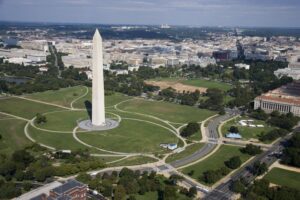
The Washington Monument is perhaps the most immediately recognizable monument in Washington, D.C. Construction on the monument, honoring the first president of the United States, started in 1848, but was halted from 1854 to 1877 due to a lack of funding. Its capstone was set on Dec. 6, 1884, and the monument officially opened on Oct. 9, 1888. It was the tallest structure in the world from 1884 to 1889.
20024
19130
19107
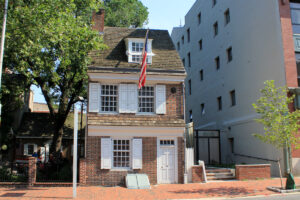
The story of Betsy Ross is one of the great American legends. As the story goes, Gen. George Washington approached Ross and asked her to make a flag. She obliged, and the rest is history. While it’s a great story, it’s most likely just a legend. Still, a visit to the Betsy Ross House is a worthy trip to learn more about Ross, a seamstress who died in 1836. The house dates to 1740 and is said to be Ross’ residence from 1776 until 1779. However, there is some debate about whether this is actually the house in which she lived.
19106
19106
Christ Church Burial Ground at 5th and Arch Streets in Philadelphia is the final resting place for several signers of the Declaration of Independence, including Benjamin Franklin and his wife, Deborah. Other signers buried in the cemetery are Joseph Hewes, Francis Hopkinson, George Ross and Benjamin Rush. Christ Church, an Episcopal church founded in 1695 and a place of worship for many of the famous Revolutionary War participants, including George Washington, owns the cemetery. The cemetery, located across from the Visitors Center and National Constitution Center, began in 1719.
19106
19106
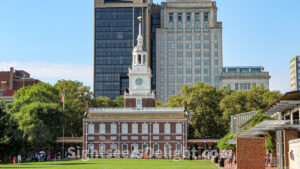
Independence Hall, the centerpiece of Independence National Historical Park, is where the Founding Fathers signed the Declaration of Independence in 1776. Inside the building nearly a dozen years later, in 1787, they laid the framework for the U.S. Constitution. Today, the historic edifice is the centerpiece of Independence National Historical Park. A guided tour of the building brings to life the many events that happened inside the building’s four walls that shaped the country’s early history.
19106
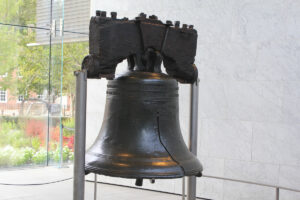
Of all the nation’s symbols, none may be as enduring as the Liberty Bell. A Philadelphia institution for two-and-a-half centuries, the bell’s story is as much fiction and folklore as it is a fact. Initially cast in 1752 by the Whitechapel Bell Foundry, a British foundry still in operation today, the bell arrived in Philadelphia in August 1752, cracked on its first use. A pair of founders, John Pass and John Stow, offered to recast the bell. Even though neither was an expert in bell casting, the two broke up the bell, melted it down and recast it after adding copper to the mix to strengthen the metal. What emerged was the Liberty Bell.
The private, nonprofit National Constitution Center brings people together to learn about, debate and celebrate arguably the most important document ever created: the U.S. Constitution. The center, located on Independence Mall, is an interactive museum that is a hub for conversation and study of the Constitution. Its congressional charter “to disseminate information about the U.S. Constitution on a nonpartisan basis.”
19106