
Guidebooks are annoying. Just because some editor who doesn’t know me tells me which restaurant is the best or what attraction is a must-see doesn’t make it a must-see attraction. Sightseers’ Delight is dedicated to the weird, the quirky and the fun. After all, traveling is fun.
If it’s not, you’re doing it wrong.
All of the places highlighted in this ever-growing database are great. Sightseers’ Delight has visited them all. We think you should make a point to see every one of them. But, this is not a guidebook. Just a webpage to help you plan your next adventure.
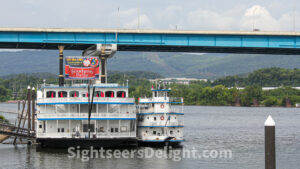
The Southern Belle Riverboat operates sightseeing trips along the Tennessee River. The Southern Belle offers a variety of daily cruise options on its 450-passenger vessel built in 1985.
37402
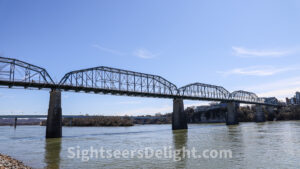
The 2,376-foot-long Walnut Street Bridge, constructed between 1889 and 1891, was the first to connect Chattanooga, Tennessee’s downtown with North Chattanooga (or North Shore). According to the Historic American Engineering Record, “The bridge was apparently the first non-military highway bridge across the Tennessee River.” Streetcars formerly ran across the bridge, which was open to vehicle traffic until May 11, 1978. The bridge was the site of two lynchings, Alfred Blount on February 14, 1893, and Ed Johnson on March 19, 1906.
37350
37321
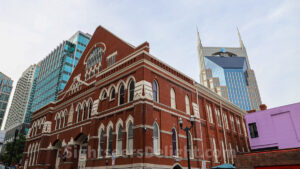
Thomas Ryman was a riverboat captain when he went to see popular revivalist Samuel Porter Jones address a crowd in Nashville. With plans to heckle Jones, Ryman instead emerged a changed man and decided to build a tabernacle where Jones could speak to large crowds. In the ensuing years, dozens of famed musicians, politicians and performers have appeared on the auditorium’s stage – from President Teddy Roosevelt to Harry Houdini to Charlie Chaplin. But, the “Mother Church of Country Music” is perhaps best known for its three-decade run as the host of the Grand Ole Opry. While the auditorium – located in the heart of downtown Nashville – eventually fell into a state of disrepair, this National Historic Landmark has been revitalized and transformed into one of the most famous music venues. The Ryman still regularly hosts concerts and is open during the day as a museum.
37219
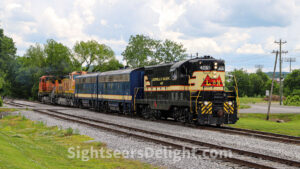
The Tennessee Central Railway Museum is named for a railroad that traces its history to 1884 and operated until 1968. At its prime, the Tennessee Central Railway operated trains over a roughly 248-mile stretch of track running from Harriman, Tennessee, to Hopkinsville, Kentucky, passing through cities such as Clarksville, Tennessee, along the way.
37210
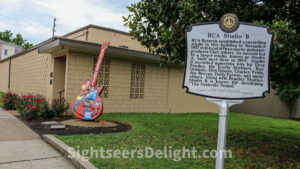
The Country Music Hall of Fame first museum opened on Music Row in 1967. The current museum — located in downtown Nashville — opened in a $37 million facility in 2001 and features various permanent and temporary exhibits dedicated to telling the history of country music, from its earliest roots to modern-day superstars. No visit to the museum would be complete without purchasing an add-on tour of RCA Studio B. Located a few blocks away from the museum, the historic studio — still in use today — has been used by some of music’s biggest stars, from The Everly Brothers to Roy Orbison to Elvis Presley.
37203
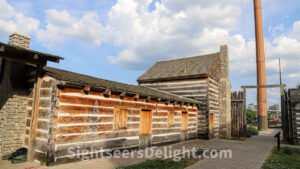
Fort Nashborough is a recreation of a stockade established in early 1779 in the French Lick area of the Cumberland River valley. The stockade was a forerunner to a settlement that would become Nashville, Tennessee. The square-shaped log stockade covered 2 acres and contained 20 log cabins. The reconstructed fortification, which stands near the original location, is maintained by Nashville Parks and Recreation.
37201
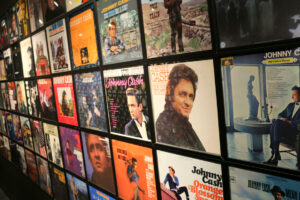
The Johnny Cash Tennessee, Museum opened its doors to the public in May 2013. The museum, located in downtown Nashville, features a remarkable collection of Cash artifacts, including the standard concert posters and album covers. But the museum’s collection includes more off the beaten path artifacts such as the first wills of Cash and his first wife, Vivian; an artist royalty check from 1957; tin cups from Folsom Prison given to Cash in 1968, and handwritten lyrics of “Walk the Line” that cash wrote in 1990 for museum founder Bill Miller.
37201
37201