
Guidebooks are annoying. Just because some editor who doesn’t know me tells me which restaurant is the best or what attraction is a must-see doesn’t make it a must-see attraction. Sightseers’ Delight is dedicated to the weird, the quirky and the fun. After all, traveling is fun.
If it’s not, you’re doing it wrong.
All of the places highlighted in this ever-growing database are great. Sightseers’ Delight has visited them all. We think you should make a point to see every one of them. But, this is not a guidebook. Just a webpage to help you plan your next adventure.
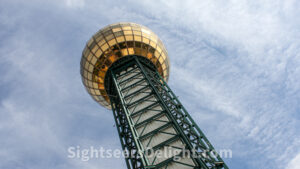
The Sunsphere is the centerpiece of World’s Fair Park and is a symbol of Knoxville, Tenn. The tower is one of two buildings that survived the Fair. Substantive redevelopment of the 67-acre Fair did not materialize for many years. Though it was underutilized for most of its post-show life, the tower is today home to an observation deck, an event space and a restaurant and bar.
37902
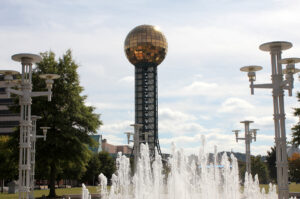
World’s Fair Park in downtown Knoxville, Tennessee, opened in 1982 on a former railroad yard site. The park was the site of the 1982 World’s Fair, officially known as the Knoxville International Energy Exposition (KIEE), which opened on May 1, 1982, and closed on October 31, 1982, and welcomed more than 11 million visitors. The Sunsphere and the Tennessee Amphitheater, the two remaining structures from the exposition, are located in the park.
37902
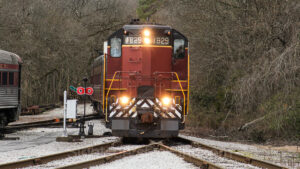
The Tennessee Valley Railroad Museum is the largest operating historic railroad in the Southeast. Designated the Official Railroad Museum of Tennessee, TVRM trains operate over rails that were first laid in 1856, and trains pass through the 979-foot-long Missionary Ridge Tunnel, an exceptional feat of engineering when it opened in the 19th century.
37421
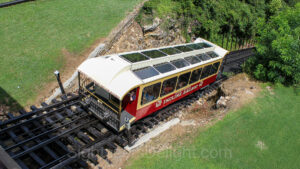
The Lookout Mountain Incline Railway is one of the most popular attractions in Chattanooga. The railroad, which opened on Nov. 16, 1895, is the last reminder of a once vibrant railroad scene that existed on Lookout Mountain. It’s also a great reminder of what a great railroad town (and great town in general) Chattanooga is. Of course, once you take the railroad to the top, you’ll be reminded why Chattanooga is the Scenic City.
37409
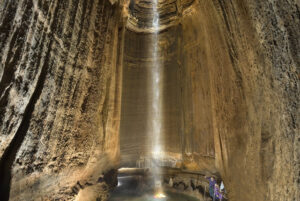
In the 1920s, Leo Lambert thought Lookout Mountain Cave would make a great tourist attraction. Once used as a hideaway for outlaws, refuge for Native Americans and a hospital during the Civil War, a railroad tunnel built in the early 1900s intersected the cave’s entrance and sealed it from the public. But that didn’t deter Lambert from searching for the cave. In 1928, he led a team of engineers and started digging an elevator shaft to access the cave. Ninety-two days later, Lambert found the cave, but not before digging through more than 400 feet of solid limestone. But when Lambert realized there might be more than just a cave buried beneath Lookout Mountain, he took off down a tight corridor, and 17 hours later, he found what today known is as Ruby Falls.
37409
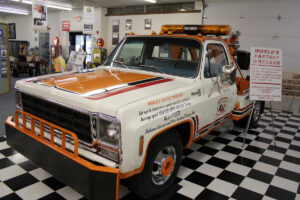
Thanks to mechanic Ernest Holmes, Chattanooga is inextricably linked to the world of towing. Holmes invented the tow truck in 1916 in Chattanooga, Tenn. Today, those trucks are indispensable emergency vehicles throughout the world. So, it makes sense the International Towing & Recovery Museum would open here in September 1995. Over its more than 20-year history, the museum has amassed a collection that includes antique and modern tow trucks, photos and related toys. Outside the museum stands the Wall of the Fallen memorial, which includes the names of towers killed in the line of duty.
37408
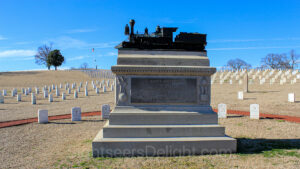
Chattanooga National Cemetery is located near the center of the city of Chattanooga, Tennessee. Administered by the United States Department of Veterans Affairs, it encompasses 120.9 acres and has more than 50,000 interments. The cemetery was established in 1863, by an order from Major General George Henry Thomas after the Civil War Battles of Chattanooga, as a place to inter Union soldiers who fell in combat.
37404
The Hunter Museum of American Art features works representing a range of genres, including American Impressionism, early modernism, regionalism and post World War II modern and contemporary art. The museum, perched on an 80-foot bluff on the edge of the Tennessee River, opened in 1952 and is located in a building represents three distinct architectural stages: the original 1904 classical revival mansion designed by Abram Garfield, the son of president James A. Garfield, which has housed the museum since its opening in 1952, a brutalist addition built in 1975, and a 2005 addition designed by Randall Stout which now serves as the entrance to the museum.
37403
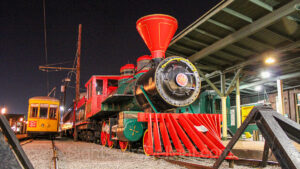
The Chattanooga Choo Choo dates to 1909 when it saw the departure of its first passenger train. The Choo Choo served as a functioning train station until Aug. 11, 1970, when the last passenger train departed. The station has since found a new life as a hotel, and guests can stay in either a standard room or in a refurbished rail car. There are plenty of places at the Choo Choo to eat and shop, and a 1924 New Orleans trolley whisks visitors around the hotel’s grounds.
37402
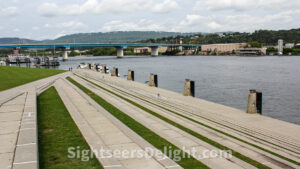
The popular Ross’s Landing sits below the Tennessee Aquarium along the south shore of the Tennessee River. The park is home to a river pier, a marina and a natural amphitheater. The green space is home to several festivals and outdoor concerts. The landing, listed on the National Register of Historic Places, is the last site of the Cherokee’s 61-year occupation of Chattanooga. It is named for John Ross, who served as the Cherokee Nation’s principal chief and is considered to be the embarkation point of the Cherokee removal on the Trail of Tears.
37402