
Guidebooks are annoying. Just because some editor who doesn’t know me tells me which restaurant is the best or what attraction is a must-see doesn’t make it a must-see attraction. Sightseers’ Delight is dedicated to the weird, the quirky and the fun. After all, traveling is fun.
If it’s not, you’re doing it wrong.
All of the places highlighted in this ever-growing database are great. Sightseers’ Delight has visited them all. We think you should make a point to see every one of them. But, this is not a guidebook. Just a webpage to help you plan your next adventure.
The Bristow Train Depot and Museum is located in the historical Bristow train depot, constructed in 1923. Bristow grew up along a railroad running between Sapulpa and Oklahoma City. The museum features information about the town’s history and the people who shaped it. A former Atchison, Topeka & Santa Fe Railway caboose, built in 1929 and rebuilt in 1969, is on display next to the museum. It bears the paint scheme of the St. Louis–San Francisco Railway (the “Frisco”).
74010
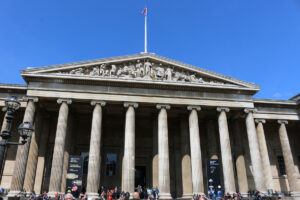
The British Museum is home to one of the most significant collections of artifacts related to human history, art and culture, including the Rosetta Stone. The museum is home to more than 100,000 objects from the Classical world, making it one of the most comprehensive collections of antiquities from that era. It was established in 1753 and primarily based on the collections of the physician and scientist Sir Hans Sloane. The museum, located in the Bloomsbury section of London, first opened on Jan. 15, 1759. More than 5.8 million people visit the museum annually, making it the most visited museum in England.
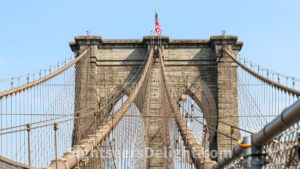
The Brooklyn Bridge is perhaps the most famous bridge in the United States. The hybrid cable-stayed/suspension bridge spans the East River and was completed in 1883 to connect Manhattan and Brooklyn. The bridge was originally known as the New York and Brooklyn Bridge and the East River Bridge.
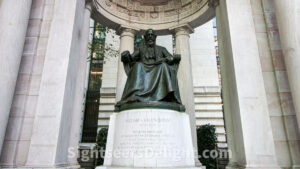
The 9.6-acre Bryant Park is unique in that it is part of the New York City Department of Parks and Recreation but privately managed. Located adjacent to the New York City Public Library, the history of the park dates to 1686, when Thomas Dongan, New York’s colonial governor, designated the area a public space. George Washington’s troops crossed the area while retreating from the Battle of Long Island in 1776, and in 1823, the site was designated a potter’s field (bodies were moved to Wards Island in 1840). The first park at this site, Reservoir Square, opened in 1847. The park was renamed in honor of New York Evening Post editor and abolitionist William Cullen Bryant in 1884.
10018
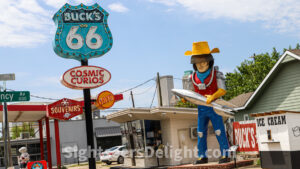
Buck Atom’s Cosmic Curios is a souvenir shop celebrating Route 66. Visitors often visit the shop, housed in a renovated 1950s PEMCO gas station, for a chance to see Buck Atom, a 21-foot-tall space cowboy-themed “muffler man.” Buck Atom debuted in Tulsa in 2019.
74120
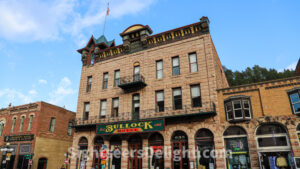
The Bullock Hotel is a historic landmark located at the corner of Wall Street and Main Street in Deadwood, South Dakota. It was built by Seth Bullock and his business partner Sol Star around 1895 for $40,000. The hotel is the oldest in Deadwood and has 28 of its original 63 rooms and a casino and restaurant. Seth Bullock began construction on the hotel shortly after the devastating Deadwood fire of 1894, which destroyed the original two-story wood-frame building. The hotel was designed in an “Italianate” and Victorian style, with the first floor featuring a grand hotel lobby, a large dining room, and several offices. The second and third stories held 63 luxury sleeping rooms with baths down the halls and two large banks of skylights for natural lighting. All rooms were furnished with iron and brass beds and oak furnishings.
57732
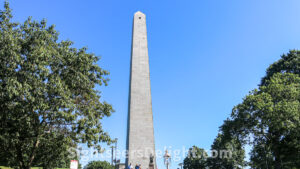
The Bunker Hill Monument was constructed to memorialize the June 17, 1775, Battle of Bunker Hill, one of the first major battles between British and Patriot forces during the American Revolution. The 221-foot-tall obelisk was erected between 1825 and 1843 in Charlestown, using granite from nearby Quincy. The Bunker Hill Museum, dedicated in June 2007, features exhibits about the battle.
02129
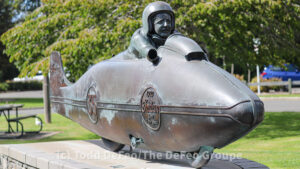
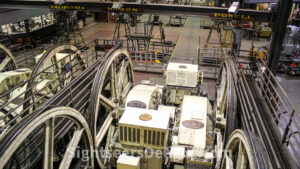
The San Francisco Cable Car Museum on Mason Street in San Francisco’s Nob Hill neighborhood is the perfect museum for anyone who wants to learn more about the history of the city’s unique attraction. The museum includes a number of old cable cars and exhibits about how they operate. Visitors can also see the powerhouse and the actual cables that pull cars up and down the city’s many hills.
94108
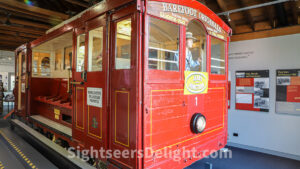
The Cable Car Museum opened in December 2000 in the former winding house, which operated from 1902 until 1978, at the Kelburn end of the Wellington Cable Car. The museum houses a pair of original grip cars that once ran along the line. No. 1 is in red 1970s livery and features contemporary advertising, while No. 3 was restored in 2005 to a green livery dating to circa 1905; a San Francisco Cable Car bell was also added. If nothing else, the area around the museum offers some of the best views of Wellington.