During a Sept. 12 visit to Dublin, U.S. President Donald Trump broke with decades of diplomatic neutrality by stating he would “love to see” Northern Ireland and the Republic of Ireland unify, calling the prospect “fantastic” and predicting it’s “going to happen eventually.”
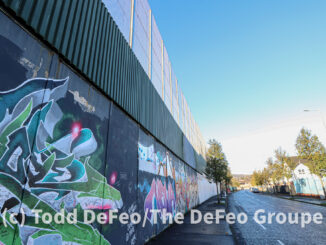
The sudden spotlight on unification underscores how the island of Ireland’s divided past remains part of modern life. For evidence, look no further than the miles of Peace Walls that still divide the city, even as it has rebuilt and reimagined itself after decades of at-times violent clashes.
Understanding the gravity of unification and the border debate requires looking back at the Good Friday Agreement. Signed in 1998, the landmark peace treaty ended a violent, three-decade era of sectarian conflict known as “The Troubles.”
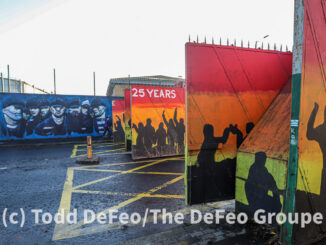
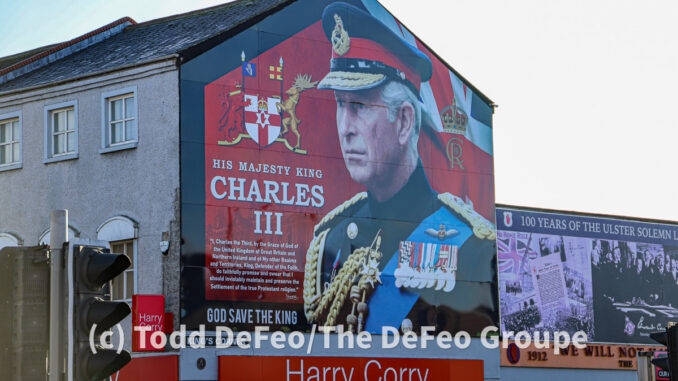
By establishing a delicate power-sharing government between nationalists, who largely favor a united Ireland, and unionists, who want to remain in the United Kingdom, the agreement allowed cities across Northern Ireland to rebuild and welcome global tourism. However, the legacy of that conflict is still fiercely protected and debated today. Peace walls still physically separate several neighborhoods, and expansive political murals act as outdoor history lessons on the fragile balance of power.
That tension isn’t relegated to history books. The long-running Drumcree parading dispute reemerged in late September “after the Parades Commission, which regulates marches, gave the go-ahead for the controversial Orange Order parade in Portadown to pass along the mainly-nationalist Garvaghy Road,” the BBC reported.
It was the first time in almost three decades the route had been approved — a reminder that questions of shared space and identity in Northern Ireland are still actively being negotiated, not settled relics of the 1990s.
For visitors wanting to look beyond the headlines, West Belfast offers a direct connection to this ongoing peace process. A key stop is Clonard Monastery, near the dividing line between the predominantly Catholic Falls Road and the Protestant Shankill Road.
Throughout the worst years of the conflict, the monastery’s Redemptorist priests—most notably Father Alec Reid and Father Gerry Reynolds—acted as vital, secret intermediaries. They facilitated behind-the-scenes dialogues between opposing factions, work that helped lay the groundwork for the IRA’s 1994 ceasefire and, eventually, the 1998 peace agreement itself.
The soaring sanctuary is not just an architectural marvel; it is a tangible monument to the quiet, dangerous work of peacemaking. Headlines will fade, but the physical history remains open for exploration.
Looking to map out a trip to see these neighborhoods and landmarks? Start with the complete Belfast Travel Guide.