
BELFAST, Northern Ireland — The T-shirt in the window of a local shop aptly summed up Belfast’s newfound relationship with the most famous ship ever to be built here: “Titanic, built by Irishmen, sunk by an Englishman.”
What more than one local told me is that for years the story of the Titanic was hidden away; it wasn’t a story to be celebrated. After all, how could something built here in Belfast and that turned into a disaster be celebrated?
In recent years, however, the tide seems to have turned, and the new view of the Titanic is that it was fine when it left Belfast. It was only when it hit the open waters in the North Atlantic Ocean that it ran into trouble.
True enough, the ship sailed to Southampton and then to Cherbourg in France without problem. Even then, its striking an iceberg and sinking may have had a little to do with its construction; at a minimum, it calls for a deeper discussion of what went wrong.
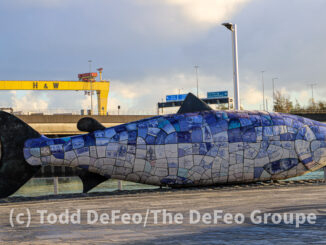
Without delving too deeply into the sinking itself, a visit to Belfast lets visitors explore what ships like the Titanic meant to the community, how they shaped generations of workers, and how shipbuilding provided a livelihood — even if not free of controversy. Ship repair remains an industry today, and the Harland & Wolff cranes loom large over the city—beacons of the industry that helped make Belfast prominent.
The mistake when studying or examining communities — and Belfast is a great example of this — is to study a single artifact or event in a silo. In this case, it’s the Titanic.
The Titanic, while a ship that sank 114 years ago, means so much more to the community.
The Titanic Belfast museum uses the Titanic’s story as a gateway to explore the community itself. It tells the story of the Titanic and its many artifacts. A life vest and the keys to the binocular cabinet — which might have helped avert disaster in April 1912 — are chilling reminders of the human toll that accompanied the sinking.
But to understand the human story, we also have to understand how ships like the Titanic affected people on the ground in Belfast. The Titanic story is everywhere one looks in Belfast.
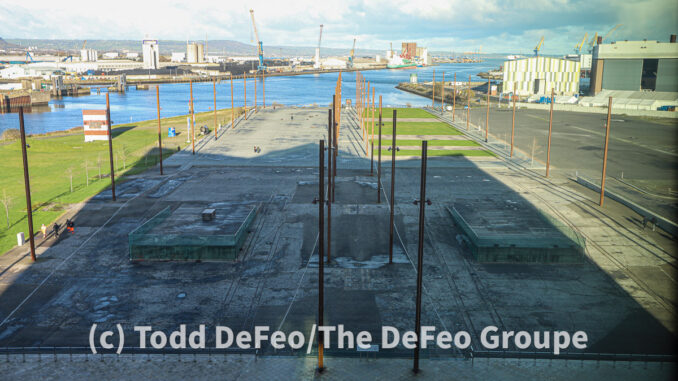
Aside from the museum, the most obvious site might be Thompson Graving Dock, the last place the Titanic ever rested before its maiden — and ultimately doomed — voyage. Nearby, its hull was laid out and its steel superstructure transformed from individual components into a massive ship.
The former Harland & Wolff headquarters is now a boutique hotel where visitors can stand where history happened. Modern attractions also await thirsty travelers, including Titanic Distillers, located in Thompson Graving Dock’s historic Pumphouse.
Tragedies happened whether we acknowledge them or not.
The real mistake is ignoring tragic moments in history or pretending they never happened. Instead, we should acknowledge them and seek to understand how they shaped the community of yesterday, the world of today, and what lessons they hold for tomorrow.
History is often a tough subject. It’s filled with calamities, chaos, and casualties, but we can’t ignore it or pretend it didn’t happen.
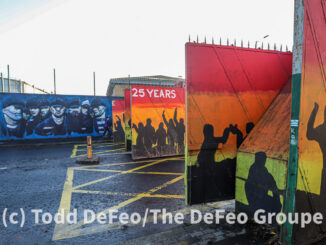
What would Belfast be like today if there were no mention of the Titanic? Would it be the same city, the same for The Troubles?
We can’t close the door on the past. Exploring and studying the past isn’t the same as revering it, and I think that’s the mistake far too many people make today.
Belfast is a compelling city because of its past. That’s what makes it such an intriguing destination today, and why anyone traveling to Ireland or the United Kingdom should include it on their itinerary.


Be the first to comment