
Guidebooks are annoying. Just because some editor who doesn’t know me tells me which restaurant is the best or what attraction is a must-see doesn’t make it a must-see attraction. Sightseers’ Delight is dedicated to the weird, the quirky and the fun. After all, traveling is fun.
If it’s not, you’re doing it wrong.
All of the places highlighted in this ever-growing database are great. Sightseers’ Delight has visited them all. We think you should make a point to see every one of them. But, this is not a guidebook. Just a webpage to help you plan your next adventure.
The LBJ Presidential Library gives visitors have the opportunity to learn about America’s 36th President, Lyndon B. Johnson, a particularly complex leader. The museum features state-of-the-art exhibitions to highlight many of the critical issues Johnson faced, including education, civil rights, the environment and the Vietnam War. Visitors can pick up a telephone and listen to audio recordings of Johnson as he conducts business. Beyond the political aspects, the museum sheds light on the personal lives of the president and the first lady, Lady Bird Johnson. The library was dedicated in May 1971 and is one of fourteen presidential libraries administered by the National Archives and Records Administration.
78705
The O. Henry Museum is the former home of William Sydney Porter, better known as O. Henry. The short story writer authored such standards as “The Gift of the Magi,” “The Ransom of Red Chief” and “The Last Leaf.” The museum collects, preserves and interprets artifacts and archival materials relative to Porter. Through exhibits, programs and tours, the museum focuses on Porter’s years in Austin. While living in the city, he wrote his earliest stories. The museum is on the National Register of Historic Places.
78701
The Susanna Dickinson Museum occupies the house Joseph Hannig constructed in 1869 for his new wife, Susanna Dickinson. Dickinson survived the Battle of the Alamo and delivered the news of its fall to Sam Houston. Houston went on to defeat Santa Anna at the Battle of San Jacinto, winning independence for the Republic of Texas. Dickinson earned the nickname of the “Messenger of the Alamo.” The “rubble-rock” style house, a style of architecture brought to the Texas Hill Country by German immigrants, is the only remaining residence of Susanna Dickinson. The museum displays rare Dickinson family artifacts and furniture Hannig produced.
78701
The Texas Capitol in Downtown Austin is perhaps the most recognizable state capitol building in the country. The Italian Renaissance Revival-style building stands 302.64 feet tall, making it the sixth tallest state capitol and taller than the United States Capitol in Washington. Workers laid the building’s cornerstone on March 2, 1885, Texas Independence Day. The capitol’s exterior walls are faced with red granite, which was quarried from near Burnet, Texas. Detroit architect Elijah E. Myers designed the edifice, which was completed in 1888. The building’s grounds are home to several monuments, including the Volunteer Firemen Monument and the Heroes of the Alamo Monument.
78701
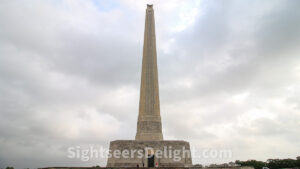
The San Jacinto Battleground State Historic Site commemorates the location of the Battle of San Jacinto. Designated a National Historic Landmark in 1960, the park is located off the Houston Ship Channel in unincorporated Harris County and is home to the San Jacinto Monument and the USS Texas, a New York-class battleship that launched on May 18, 1912, and served until it was decommissioned on April 21, 1948.
77571

The National Museum of Funeral History contains a collection of artifacts and relics that aim to “educate the public and preserve the heritage of death care.” The 35,000-square-foot museum opened in 1992 and is home to “the country’s largest collection of funeral service artifacts and features renowned exhibits on one of man’s oldest cultural customs,” according to its website. The museum features a wide array of caskets and hearses, which one might expect to see at a funeral museum. But, the well-researched exhibits go much deeper, ranging from a look at celebrities’ deaths to the history of embalming to the mourning customs of the 19th century.
77090
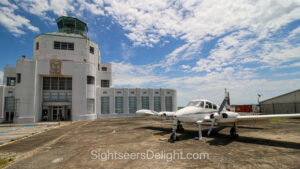
The 1940 Air Terminal Museum is located at at William P. Hobby Airport and housed in the original art deco building which served as the first purpose-built terminal for passenger flight in Houston. The museum features collections focusing on civil aviation history in Space City. It is operated by the Houston Aeronautical Heritage Society (HAHS), a non-profit organization.
77061
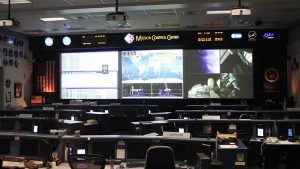
There are no launch pads at Johnson Space Center, but the center is home to the space agency’s mission control and astronaut training facilities. It was here that people on the ground oversaw space missions, including the Gemini, Apollo and Space Shuttle programs. While the space center has a bit of a tourist trap feel to it, it’s not a bad destination for anyone interested in history or space travel. While here, be sure to check out the Saturn V rocket on display in Rocket Park. These massive rockets propelled Apollo astronauts from Cape Canaveral, Fla., into space on their way to the moon. In 2012, NASA also relocated Space Shuttle Explorer (now known as Space Shuttle Independence), a shuttle replica, to the space center.
77058
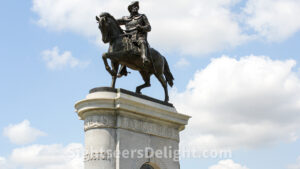
The 445-acre Hermann Park is one of the most visited public areas in all of Houston. The park sits in the middle of Texas Medical Center, Rice University and the Museum District. The park is named for George H. Hermann, who gave the land to the city in 1914.
77030

The Art Car Museum is a contemporary art museum that celebrates the post-modern age of car-culture. The museum features a collection of stock cars and lowriders that artists have remolded and customized to their choosing. The museum, nicknamed the Garage Mahal, opened in February 1988.
77007