
Guidebooks are annoying. Just because some editor who doesn’t know me tells me which restaurant is the best or what attraction is a must-see doesn’t make it a must-see attraction. Sightseers’ Delight is dedicated to the weird, the quirky and the fun. After all, traveling is fun.
If it’s not, you’re doing it wrong.
All of the places highlighted in this ever-growing database are great. Sightseers’ Delight has visited them all. We think you should make a point to see every one of them. But, this is not a guidebook. Just a webpage to help you plan your next adventure.
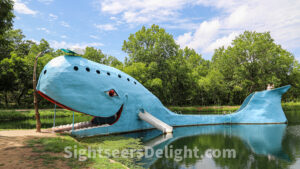
Hugh Davis built the Blue Whale of Catoosa, a waterfront structure, in the early 1970s as an anniversary gift to his wife, Zelta, a collector of whale figurines. Since then, the whale has become one of the most recognizable attractions along Route 66. The pond surrounding the whale was initially fed by a spring and intended only for family use. However, it was later a popular swimming spot for locals and passersby, though today, swimming is prohibited. The Davis family closed the landmark to the public in 1988, but it has since been restored and re-opened.
74015
The Bristow Train Depot and Museum is located in the historical Bristow train depot, constructed in 1923. Bristow grew up along a railroad running between Sapulpa and Oklahoma City. The museum features information about the town’s history and the people who shaped it. A former Atchison, Topeka & Santa Fe Railway caboose, built in 1929 and rebuilt in 1969, is on display next to the museum. It bears the paint scheme of the St. Louis–San Francisco Railway (the “Frisco”).
74010
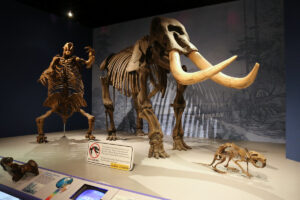
The Illinois State Museum in Springfield, Illinois, is the state’s official museum of the natural history. Founded in 1877, the museum was originally located inside the sixth Illinois State Capitol but moved as the state government expanded. Between 1961 and 1963, the state built the museum’s current building, the first purpose-built state museum. Exhibits include local fossils, dioramas of Native American life, a collection of glass paperweights and archaeological and ethnographic artifacts.
62706
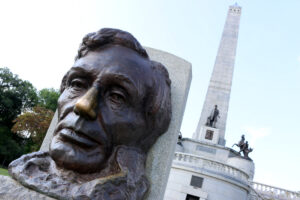
Oak Ridge Cemetery in Springfield, Illinois, is famous as the final resting place of President Abraham Lincoln, his wife and all but one of his children. Lincoln’s Tomb, Oak Ridge, the third and now only public cemetery in Springfield, is the second-most visited cemetery in the United States, after Arlington National Cemetery. William Saunders designed the cemetery as part of the Rural Cemetery Landscape Lawn Style. The location was selected, in part, because of the rolling hills.
62702
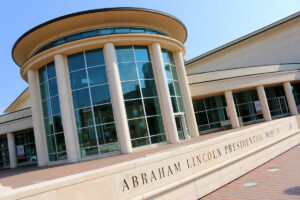
For more than a decade, the Abraham Lincoln Presidential Library and Museum has provided visitors with a unique insight into the nation’s 16th president. The museum is home to an incredible collection of artifacts, books and documents that help tell the story of the man who presided over the country during one of the most difficult times. The library is not part of the National Archives and Records Administration’s network of presidential libraries. It is administered by the Illinois Historic Preservation Agency.
62701
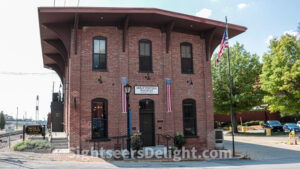
Abraham Lincoln went to the Great Western Railroad depot on the morning of Feb. 11, 1861, to begin his inaugural journey to Washington D.C. Lincoln and his eldest son, Robert, planned to leave on the 8 a.m. train, while the rest of his family would follow later that day. Lincoln gave a short speech to the group of friends and family who came to see him off. Today, the privately owned depot features Lincoln-related exhibits.
62701
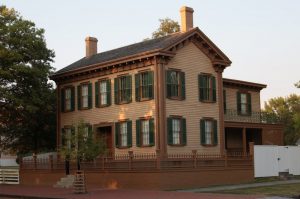
President Richard Nixon authorized the Lincoln Home National Historic Site Aug. 18, 1971. The park was formally established on Oct. 9, 1972, to preserve and protect the only home ever owned by President Abraham Lincoln. In total, the park’s buildings make up four-and-a-half square blocks on 12 acres. Among the buildings is the home where the 16th president of the United States lived from 1844 to 1861.
62701
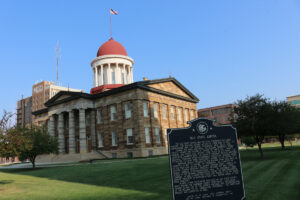
The Old State Capitol State Historic Site, in downtown Springfield, Illinois, sits where the state’s fifth Capitol building once stood. Built in the Greek Revival style between 1837 and 1840, the building served as the state house from 1840 to 1876. The building was extensively altered during its life as a courthouse. So, to restore and preserve the edifice, workers dismantled and rebuilt it between 1966 and 1969. The building today resembles how it looked in 1860 when Abraham Lincoln last saw the capitol before leaving for Washington.
62701
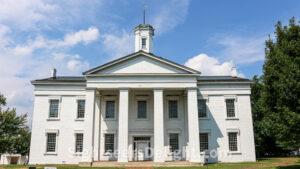
The Vandalia State House is the fourth statehouse of Illinois and is the oldest surviving capitol building in the state. The structure served as the capital from 1836 until 1839, when it moved to Springfield. The two-story painted brick structure later served as a courthouse and was converted into a state monument in 1933.
62471
The sprawling 2,200-acre Cahokia Mounds complex in Collinsville, Ill., are some of the most impressive Native American mounds in the country. While settlement in the area may date to roughly 1200 BC (during the Late Archaic period), the mounds as they are today were settled circa 600 AD (during the Late Woodland period). The mounds were probably built during the 9th century during the Emergent Mississippian cultural. The settlement has the distinction of being the largest, most influential urban settlement of the Mississippian culture.
62234