
The Akron Civic Theatre, originally opened as the Loew’s Theatre, is one of downtown Akron’s most celebrated landmarks and a rare surviving example of a 1920s atmospheric movie palace. Designed by renowned architect John Eberson, the theatre immerses audiences in a whimsical Mediterranean courtyard setting, complete with twinkling stars and drifting clouds projected across the domed ceiling. Seating more than 3,000 guests, the Civic is the only remaining theater of the 11 originally built by entertainment pioneer Marcus Loew, founder of the Loew’s theater chain.
44308
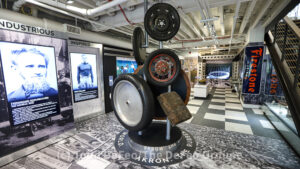
The new Akron History Center opened on Saturday, April 5, 2025, in downtown Akron at 172 South Main Street. Its mission is to create an enduring, free, museum-quality exhibit about Akron’s history. Operated by the Akron-Summit County Public Library in collaboration with the Summit County Historical Society and the non-profit Akron History Center, incorporated in 2023, the Akron History Center features more than 60 exhibits showcasing more than 100 historical artifacts, accompanied by stories told on over 30 video screens. Akron History Center, governed by a 15-member board of volunteers, raised $2.2 million. The initial investment was a $500,000 grant from Akron, followed by support from Akron’s foundations, businesses and local residents. The Akron History Center became possible when the Bowery Development Group acquired six historic buildings on Main Street in 2016.
Barrie Projects of Cleveland Heights conceived the design of the center. Dennis and Kathy Barrie also created the International Spy Museum in Washington, D.C., the National Museum of Organized Crime & Law Enforcement in Las Vegas, the U.S. Olympic and Paralympic Museum in Colorado Springs, the Maltz Museum of Jewish Heritage, and the National Museum of Psychology in Akron. Communication Exhibits of Canal Fulton designed and fabricated the exhibits. The company has created exhibits for industry and museums for more than 40 years.
44308
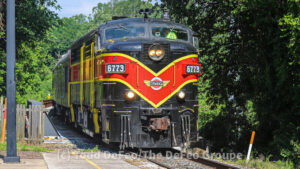
The Cuyahoga Valley Scenic Railroad offers a unique way to explore the natural beauty of the Cuyahoga Valley National Park as it winds between Akron and the greater Cleveland area. Originally opened in 1880 by the Valley Railroad Company, the line was purchased by the National Park Service in 1987 to enhance access to the park and attract more visitors to the growing recreation area. Excursion service resumed the following year, and by 1994 the operation was reorganized under its current name as the Cuyahoga Valley Scenic Railroad. Today, CVSR runs a variety of seasonal and themed trips with vintage diesel locomotives and classic passenger cars, offering an unforgettable rail experience through a scenic landscapes.
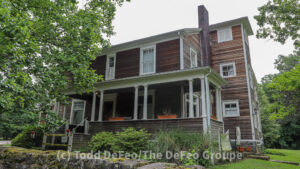
Benjamin O. Greene and Salmon Hoisington built this house circa 1830. The Perkins family, a well-known local family, rented it from 1835 to 1837 as their Stone House (now known as the Perkins Stone Mansion) was being built. Colonel Simon Perkins purchased the house, which was originally a two-room structure, in early 1844 and then rented it to abolitionist John Brown and his family. Brown, recovering from bankruptcy in 1844, entered into a wool partnership with Perkins. Brown lived in the house on and off from 1844 until 1854. The house was expanded over the years, and the Portage Golf Club, a Portage Country Club predecessor, operated in the house for more than two decades, starting in 1884.
44320
Located along the historic Ohio & Erie Canal, Lock 2 is one of roughly 20 locks that once lifted and lowered canal boats through the center of Akron. The lock played a vital role in the 19th-century canal system that linked Akron to Lake Erie in Cleveland and later to the Ohio River near Portsmouth, creating important trade routes that helped the region rapidly grow. Today, Lock 2 is easily accessible along the scenic Towpath Trail, positioned between Akron Children’s Hospital and Canal Park Stadium.
44308
The Matthews Hotel Monument, located at North Howard Street and Martin Luther King Jr. Boulevard, honors one of Akron’s most important cultural landmarks. From the 1930s through the 1950s, the Matthews Hotel welcomed legendary jazz musicians who performed in the city while traveling between major gigs in New York and Chicago. Icons such as Cab Calloway, Louis Armstrong, Count Basie and Ella Fitzgerald stayed here during an era when segregation prevented Black performers from lodging in white-only downtown hotels. The original hotel was demolished in 1982. Akron artist Miller Horns, who passed away in 2012, dedicated his life to ensuring its legacy lived on. Construction of the monument began in 2011 with support from local contractors who donated labor and materials.
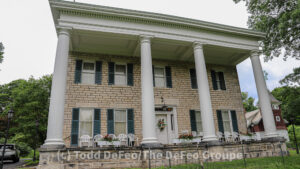
Colonel Simon Perkins, the son of Akron’s co-founder, General Simon Perkins, built the Greek Revival Perkins Stone Mansion, which was built between 1835 and 1837. Isaac Ladd of Warren, Ohio, possibly designed the mansion. The Summit County Historical Society purchased the mansion in 1945. The house, today a museum, interprets the Perkins family and Akron’s history.
44320
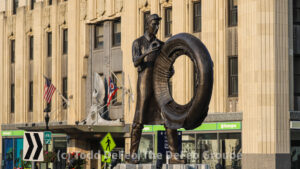
Akron unveiled the 12-foot-tall Rubber Worker cast bronze statue in May 2021. It stands in a roundabout at the intersection of Main and Mill streets. The statue depicts a rubber worker wrapping a tire and is based on the cover image of “Wheels of Fortune: The Story of Rubber in Akron,” a 1999 book by David Giffels and Steve Love. The ceremony included Akron Mayor Dan Horrigan and Zanesville-based sculptor Alan Cottrill.