
Three European carriers are making different bets at the start of 2026 on what matters to flyers: bigger networks, better onboard connectivity and brand legacy.
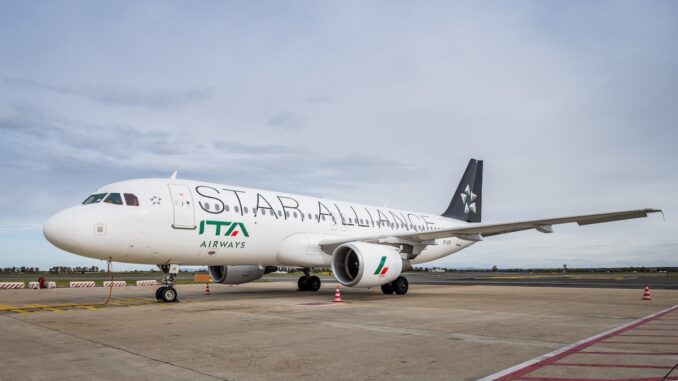
Star Alliance on March 31 formally welcomed ITA Airways as its newest member, completing the Italian carrier’s integration into what the alliance bills as the world’s largest airline network. ITA marked the move with a ceremony at its Piazza di Spagna Lounge in Rome Fiumicino Airport Terminal 3, joined by alliance and partner executives.
Starting April 1, ITA is connected to the Star Alliance system, linking its hubs at Rome Fiumicino and Milan Linate into a network that Star Alliance says reaches more than 1,150 destinations worldwide. The alliance said ITA’s entry will expand options across Italy and improve end-to-end travel through features such as through check-in, reciprocal frequent flyer recognition and lounge access.
Across the Irish Sea, Aer Lingus is putting its emphasis on the onboard experience, equipping the first aircraft in its fleet with Starlink to offer free, high-speed Wi-Fi. The airline said passengers on EI105 from Dublin to John F. Kennedy International Airport in New York were the first to use the service, which it says supports streaming, work and gaming across the cabin.
Aer Lingus’ first Starlink-equipped aircraft is an Airbus A330, EI-EIN, and the airline said the aircraft completed extensive testing after installation. Aer Lingus plans a phased rollout, starting with North America routes and then European flying, with Starlink expected to be available across its long-haul fleet by the first quarter of 2027.
Meanwhile, SAS is leaning into its history as it begins its 80th year of operations, unveiling a special livery on an Airbus A330-300 to mark eight decades of connecting Scandinavia with the world. SAS traced the anniversary to its first intercontinental flight on Sept. 17, 1946, when a route from Stockholm to New York helped open long-haul travel for the region.
The commemorative design washes the aircraft in SAS blue, reworks the Scandinavian flag as a nod to the carrier’s 1980s look and adds an anniversary symbol inspired by the aircraft’s engines and fuselage. SAS said its long-haul fleet includes eight A330-300s and the Airbus A350, with Copenhagen as its primary international gateway.


Be the first to comment