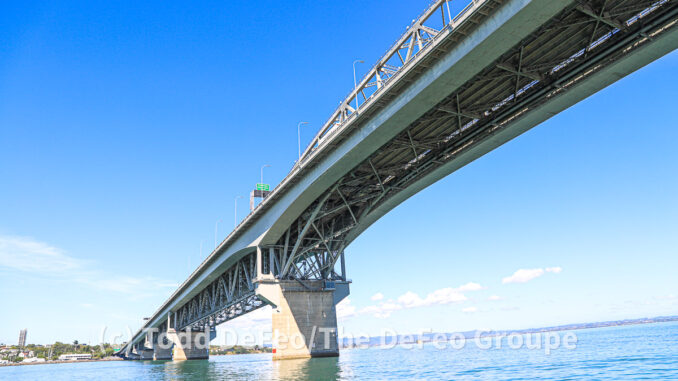
A permit for a planned Jan. 31 protest crossing the iconic Auckland Harbour Bridge has been declined, and police said they would not facilitate access to the bridge.
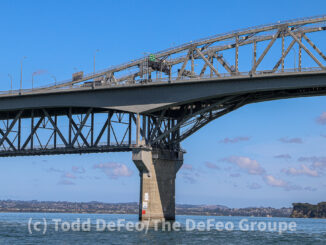
Officials said that large groups of people walking across the Auckland Harbour Bridge, which opened in 1959, cause the structure to sway. That swaying causes vibrations, leading to large movements between the clip-ons — two lanes were added to each side in 1968-1969 — and the central truss bridge lanes.
Although no major structural damage has yet been caused by pedestrian-induced vibrations, evidence from events such as the Hīkoi mō te Tiriti in 2024 and recent inspections has clarified the need for stricter controls on pedestrian access, especially as the bridge ages, to prevent such damage.
“The Auckland Harbour Bridge is New Zealand’s most critical transport asset and is designed for a steady flow of vehicles,” New Zealand Police and NZ Transport Agency Waka Kotahi said in a joint statement. “The bridge is not designed for use by pedestrians.”
In addition, individuals face safety risks from unstable footing caused by bridge vibrations and the potential for entrapment or crush injuries from movement between the clip-on structure and the truss bridge deck.
In contrast to events such as the Auckland Marathon, where numbers can be effectively capped and movement is dispersed, uncontrolled groups such as protests typically gather in dense groups.
The Freedom and Rights Coalition, which launched in 2021 to protest the government’s COVID-19 lockdown restrictions and vaccine mandates, is organizing the Jan. 31 protest.
Several agencies have been working together on planning. Officials said they are well placed to respond to any protest activity in the Auckland region.