
Guidebooks are annoying. Just because some editor who doesn’t know me tells me which restaurant is the best or what attraction is a must-see doesn’t make it a must-see attraction. Sightseers’ Delight is dedicated to the weird, the quirky and the fun. After all, traveling is fun.
If it’s not, you’re doing it wrong.
All of the places highlighted in this ever-growing database are great. Sightseers’ Delight has visited them all. We think you should make a point to see every one of them. But, this is not a guidebook. Just a webpage to help you plan your next adventure.
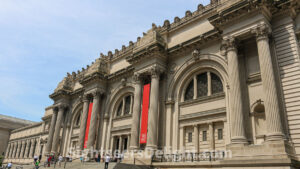
The Met was established in 1870 and since that time has built one of the best museum collections in the world. Its collection includes works from such renowned artists as Vincent van Gogh, Claude Monet, Pablo Picasso and Henri Matisse, to name just a few. One incredible piece is by Emanuel Gottlieb Leutze, depicting Gen. George Washington leading his trips across the Delaware River.
10028
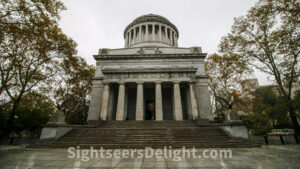
The General Grant National Memorial is the final resting place of President Ulysses S. Grant and his wife, Julia. The memorial is the largest mausoleum in North America and honors the man who credited with ending the bloodiest conflict in American history as Commanding General of the Union Army. After his Presidency, Grant settled in New York City and died of throat cancer on July 23, 1885. He was laid to rest in New York City on Aug. 8, 1885. More than a million people attended the parade and dedication ceremony of Grant’s Tomb on April 27, 1897.
10027
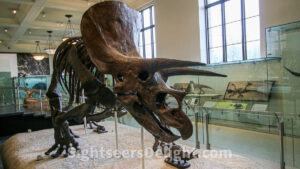
Founded in 1869, the American Museum of Natural History in New York City is one of the world’s preeminent cultural institutions and features 45 permanent exhibition halls. The museum is home to the Theodore Roosevelt Memorial, New York State’s official memorial to its 33rd governor and the nation’s 26th president, and a tribute to Roosevelt’s enduring legacy of conservation. The museum’s five active research divisions and three cross-disciplinary centers support approximately 200 scientists, whose work draws on a world-class permanent collection of more than 34 million specimens and artifacts, as well as specialized collections for frozen tissue and genomic and astrophysical data, and one of the largest natural history libraries in the world.
10024
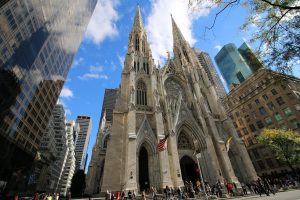
The Neo-Gothic-style Roman Catholic St. Patrick’s Cathedral is perhaps the most recognized church in the United States. Construction of the cathedral began in 1858 but was halted during the Civil War. It resumed in 1865, and the cathedral was completed in 1878. It was dedicated on May 25, 1879. The church’s spires were added in 1888.
10022
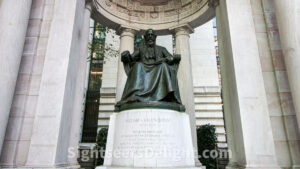
The 9.6-acre Bryant Park is unique in that it is part of the New York City Department of Parks and Recreation but privately managed. Located adjacent to the New York City Public Library, the history of the park dates to 1686, when Thomas Dongan, New York’s colonial governor, designated the area a public space. George Washington’s troops crossed the area while retreating from the Battle of Long Island in 1776, and in 1823, the site was designated a potter’s field (bodies were moved to Wards Island in 1840). The first park at this site, Reservoir Square, opened in 1847. The park was renamed in honor of New York Evening Post editor and abolitionist William Cullen Bryant in 1884.
10018
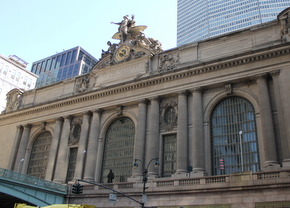
There are some places that are truly unparalleled, whether it’s the atmosphere, the history or the general experience. While New York City as a whole falls into that category, Grand Central Terminal does as well. The New York Central built the grand terminal, which opened in 1913. An estimated 21.6 million people visit the terminal annually, making it the sixth most visited tourist attraction in the world, according to Travel + Leisure magazine. Even if travel plans in New York don’t call for an entry into or departure from Grand Central, a visit to the Terminal is well worth the sidetrack, no matter how far out of the way it might be.
10017
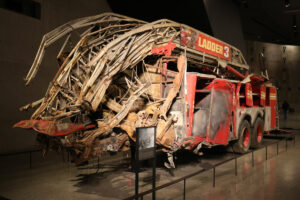
Sept. 11, 2001, was one of the darkest days in the city’s history. The city persevered and rebuilt. The National September 11 Memorial & Museum commemorates that fateful day. The 9/11 Memorial & Museum, located in the basement and footprint of the former Twin Towers, is a poignant reminder of the day, with exhibits bringing to life the heartbreaking, heartwarming and heroic stories that emerged from the devastation and destruction.
10007
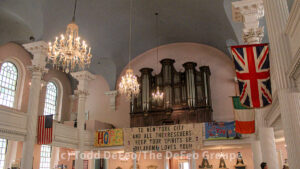
St. Paul’s Chapel was completed in 1766 as a “chapel of ease” for those who could not make it to the Parish of Trinity Church. Ten years later, the church survived the Great Fire of New York. In 1789, George Washington attended services here on Inauguration Day and continued to attend the church for two more years as the city served as the nation’s capital. Years later, on Sept. 11, 2001, the church was only yards away from the worst terrorist attack on American soil.
10007
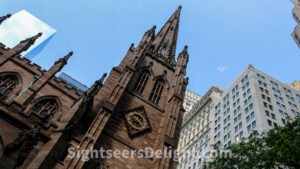
The historic Trinity Church is a parish church in the Episcopal Diocese of New York and located near the intersection of Wall Street and Broadway in Manhattan. The first Trinity Church was built on Wall Street in 1698 and faced the Hudson River. The building was destroyed in the Great Fire of 1776 during the Revolutionary War. In 1790, the second Trinity Church was completed and faced Wall Street. It featured a 200-foot-tall steeple. The third and current Trinity Church was built between 1839 and 1846.
10006
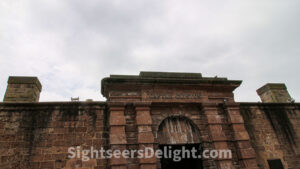
Castle Clinton, also known as Fort Clinton and previously Castle Garden, is a circular sandstone fort located in what is today Battery Park. The structure sits roughly two blocks west of where Fort Amsterdam was built in 1626. At the time, New York City was still named New Amsterdam. Construction on Castle Clinton started in 1808 and finished in 1811; it was built on a small artificial island just offshore. The structure was America’s first immigration station and predates Ellis Island. More than 8 million immigrants passed through Castle Clinton while entering the United States between 1855 and 1890.
10004