
Guidebooks are annoying. Just because some editor who doesn’t know me tells me which restaurant is the best or what attraction is a must-see doesn’t make it a must-see attraction. Sightseers’ Delight is dedicated to the weird, the quirky and the fun. After all, traveling is fun.
If it’s not, you’re doing it wrong.
All of the places highlighted in this ever-growing database are great. Sightseers’ Delight has visited them all. We think you should make a point to see every one of them. But, this is not a guidebook. Just a webpage to help you plan your next adventure.
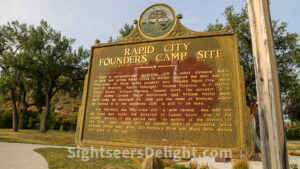
The 60-acre Founders Park sits on the site where the original “founders” of Rapid City camped in 1876. Most of the land, which serves as a trailhead for paths along Rapid Creek, was acquired following the 1972 Flood.
57701
The Minuteman Missile National Historic Site includes three sites along a fifteen-mile stretch of Interstate 90 in Western South Dakota. Congress authorized the park in 1999 to preserve components of the Minuteman II intercontinental ballistic missile system. The site includes the Delta-01 Launch Control Facility, the missile silo at Delta-09 and the visitors center. “The Delta-01 Launch Control Facility provides a remarkable opportunity to view the front line of the Cold War,” Superintendent Eric Leonard said in a 2020 news release.
57567
48124
48124
48009
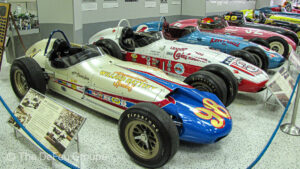
Since its first running in 1911, the Indianapolis 500 — known as “The Greatest Spectacle in Racing” — has developed into an institution and a national treasure. The Indianapolis Motor Speedway Hall of Fame Museum, located in the middle of the famous speedway, is dedicated to preserving artifacts related to the races and telling the race’s history. The museum opened in 1956 in a building located outside of the track. Large enough only for a few displays, twenty years later, the museum moved into a new building constructed in the middle of the track’s infield. The museum’s exhibits are constantly changing, and there are usually at least 75 cars on display at any given time.
46222
The Indianapolis Zoo is a 64-acre non-profit zoo, public aquarium, and botanical garden in Indianapolis, Indiana, United States. Incorporated in 1944, the Indianapolis Zoological Society established the first zoo at George Washington Park in 1964.
46222
Located within White River State Park, the museum includes an array of exhibits focused on the science, culture and history of the state. That includes exhibits focused on prehistoric times through the present day. State Librarian R. Deloss Brown is credited with creating the original collection for the museum when he started to amass a collection of minerals and curiosities during the Civil War. The Indiana General Assembly in 1869 passed a law to provide “for the collection and preservation of a Geological and Mineralogical Cabinet of the Natural History of this State.”
46204

The Indiana World War Memorial Plaza in downtown Indianapolis, Indiana, was originally built to honor the veterans of World War I. It was conceived in 1919 as a location for the national headquarters of the American Legion and a memorial to veterans. Today, the American Legion Mall is located at the north end, and the Veterans Memorial Plaza with its obelisk is located at the south end. The centerpiece is the Indiana World War Memorial, which was modeled after the Mausoleum of Halicarnassus. The Indiana World War Memorial is home to a military museum, the Shrine Room and an auditorium. The Indiana World War Memorial was designated a National Historic Landmark District on Oct. 11, 1994.
46204

Sitting in the heart of Indianapolis, the obelisk-shaped Soldiers’ and Sailors’ Monument is Indiana’s official memorial to the Hoosiers that served in the Revolutionary War, the War of 1812, the Mexican War, the Civil War, the Frontier Wars and the Spanish-American War. The Soldiers & Sailors Monument is the first United States monument dedicated to the common soldier. It is also the largest outdoor memorial in the state of Indiana and is one of the most recognizable landmarks of Indianapolis. The Limestone used for the monument is gray oolitic limestone from the Romona quarries of Owen County. Standing 284 feet, 6 inches high, it is 15 feet shorter than the Statue of Liberty. The monument cost $598,318 in 1902 and was added to the National Register of Historic Places on February 13, 1973.
46204