


“It was sad when that great ship went down / Husbands and wives and little children lost their lives / It was sad when that great ship went down”
BELFAST, Northern Ireland — It’s well known that the Titanic had 20 lifeboats that could carry 1,178 people, which was less than half the number on board for its maiden voyage. Only 18 were deployed on the fateful night of April 14-15, 1912.
Anyone familiar with the movie — including, but not limited to, the 1980 classic, Raise the Titanic — knows how the story ends. It’s a story of tragedy, missed opportunities and what-ifs.
Titanic Belfast is an extraordinary museum that helps visitors reflect on some of the tragedy’s most pressing questions. While it covers the story of the Titanic, its approach is much broader, focusing on the city of Belfast and the people affected by its industry.
It also displays some incredible artifacts from the Titanic. Among them is the violin that bandleader Wallace Hartley played as the ship sank; his fiancée gave it to him, and it was found floating in the ocean about 10 days after that great ship went down.
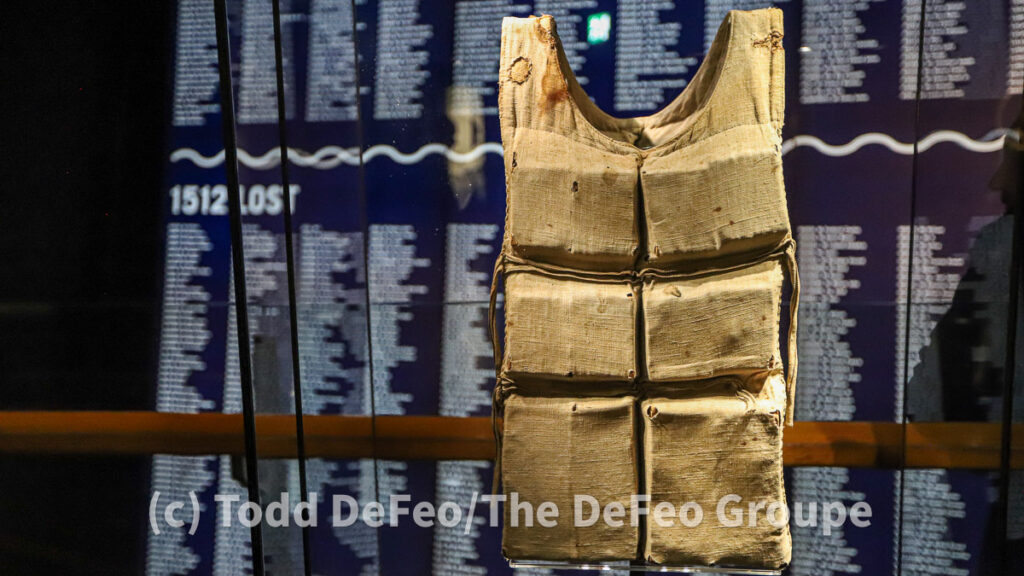
However, the most powerful artifact might be a life vest from the Titanic. Of the roughly 3,500 life vests aboard the vessel, only a handful, possibly a dozen, exist.
Robert Edwards, the quartermaster of the Cable Ship Mackay-Bennett, the first of four ships the White Star Line chartered to search for bodies after the sinking, recovered the linen and cork lifevest from a field of debris.
Today, it stands as a silent, stunning reminder of the human toll, which can be measured in at least two ways. There is the human toll that Belfast experienced building ships like the Titanic, and there is the human toll of the sinking itself.
Either way, the Titanic Belfast makes visitors think, and that is the mark of a great museum.